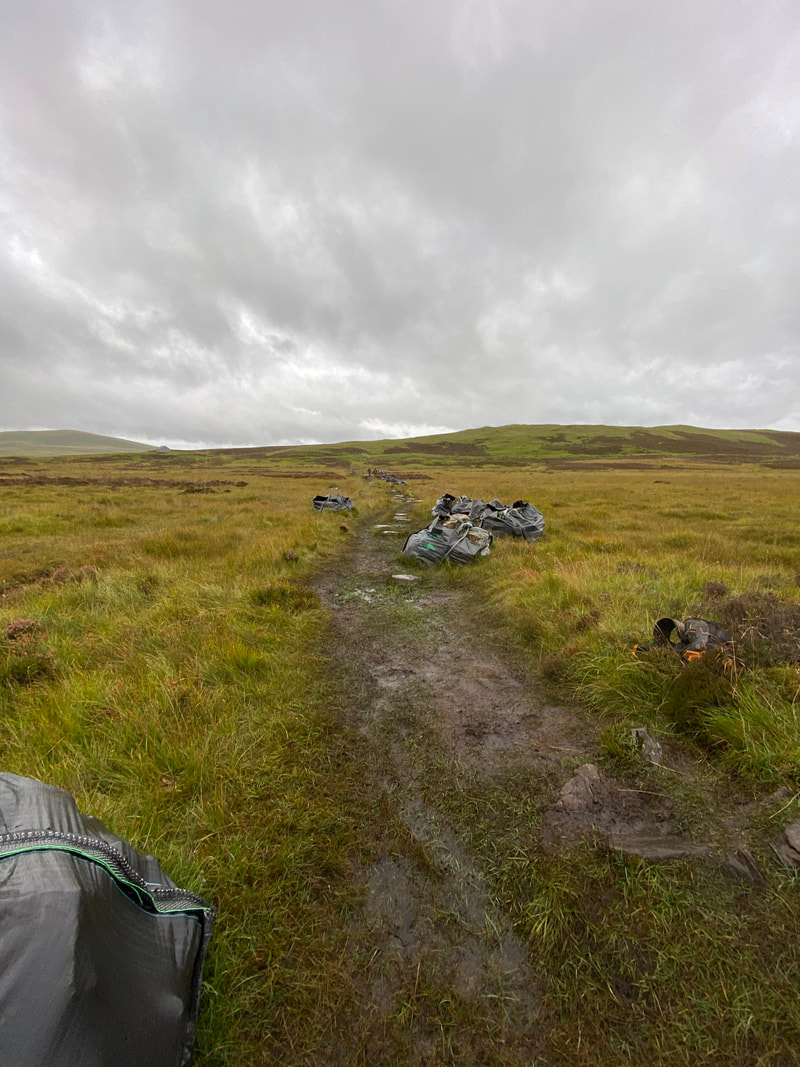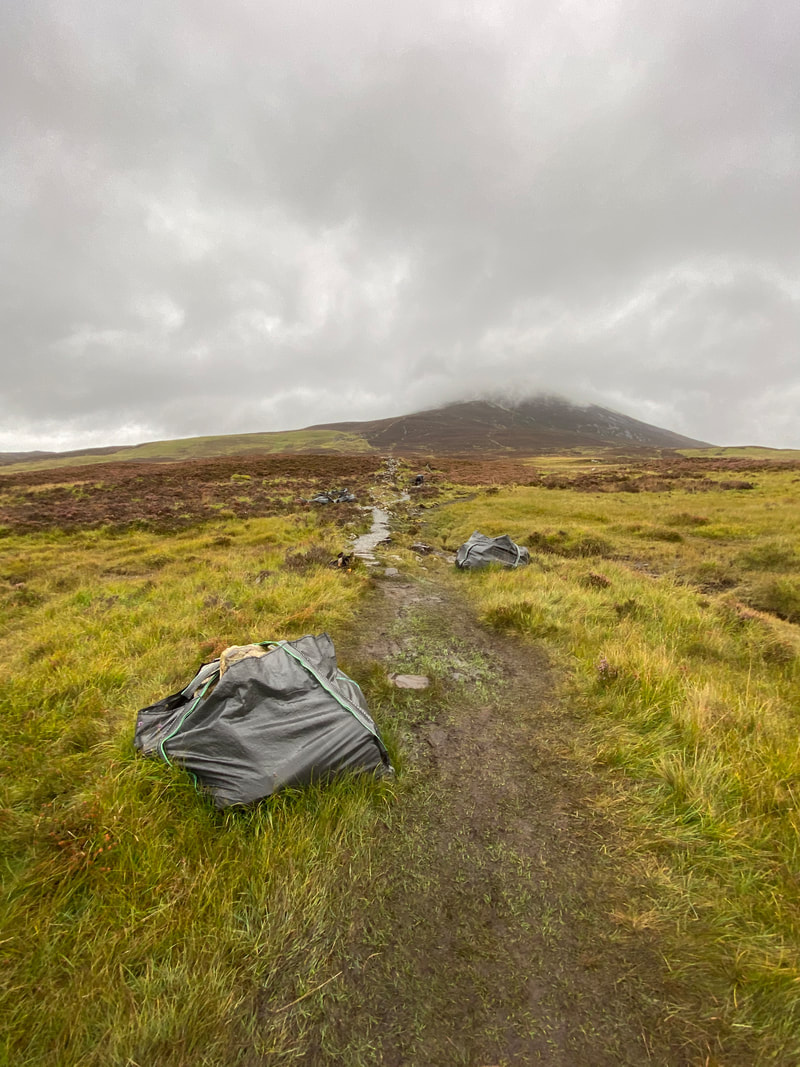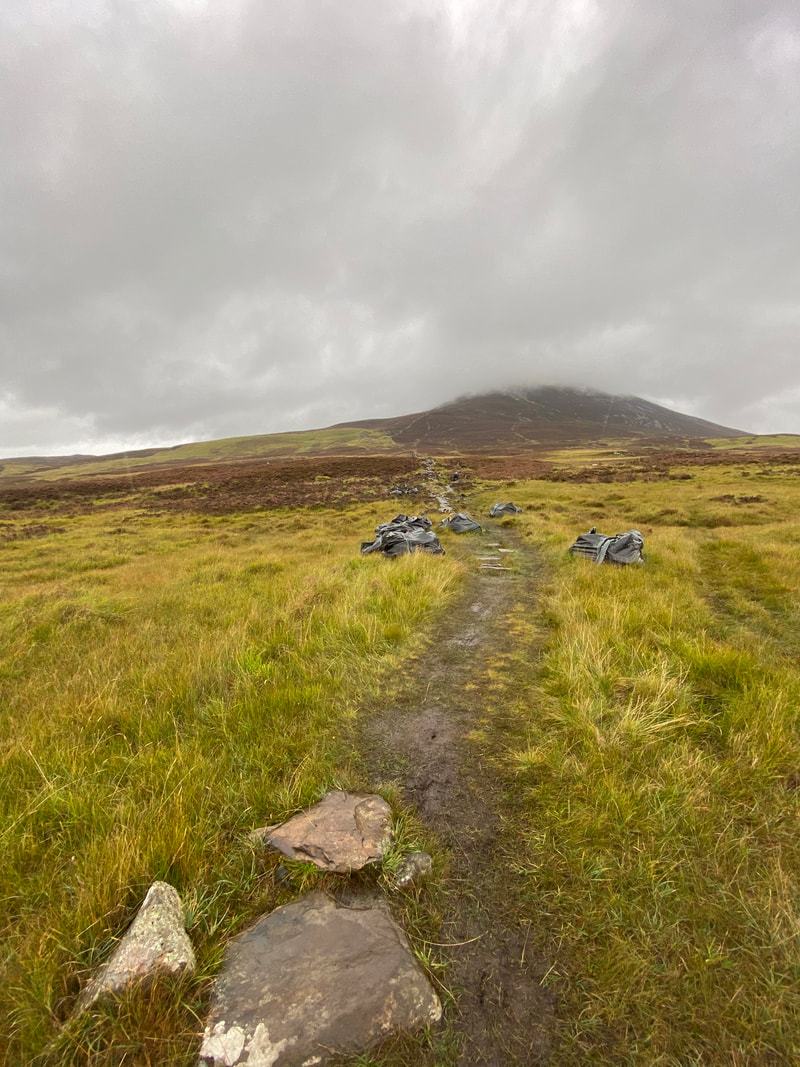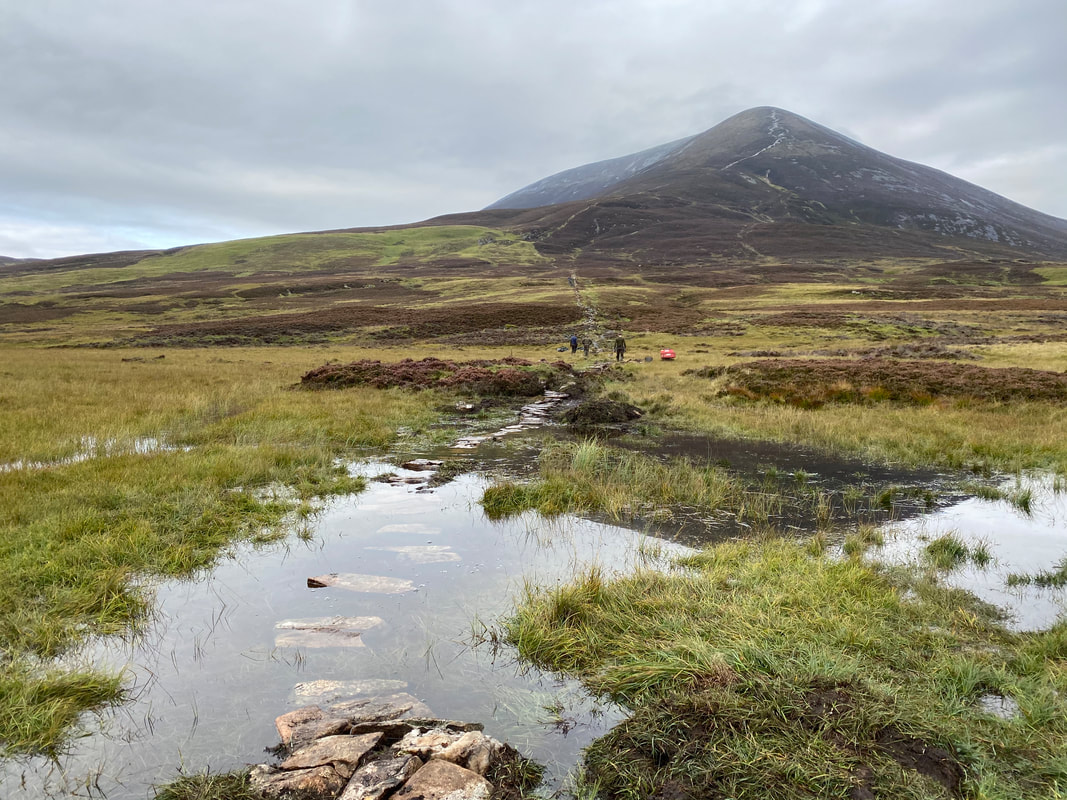
Cairn Liath. Fenland path and light touch works.
We returned for the final time to finish the lower Fenland path and to do some extra drainage work above the site to control water pushing down from the summit area and so protect the new path.
The top section just involved the construction of extra water bars to slow the flow of water down and channel it to the sides at regular intervals.
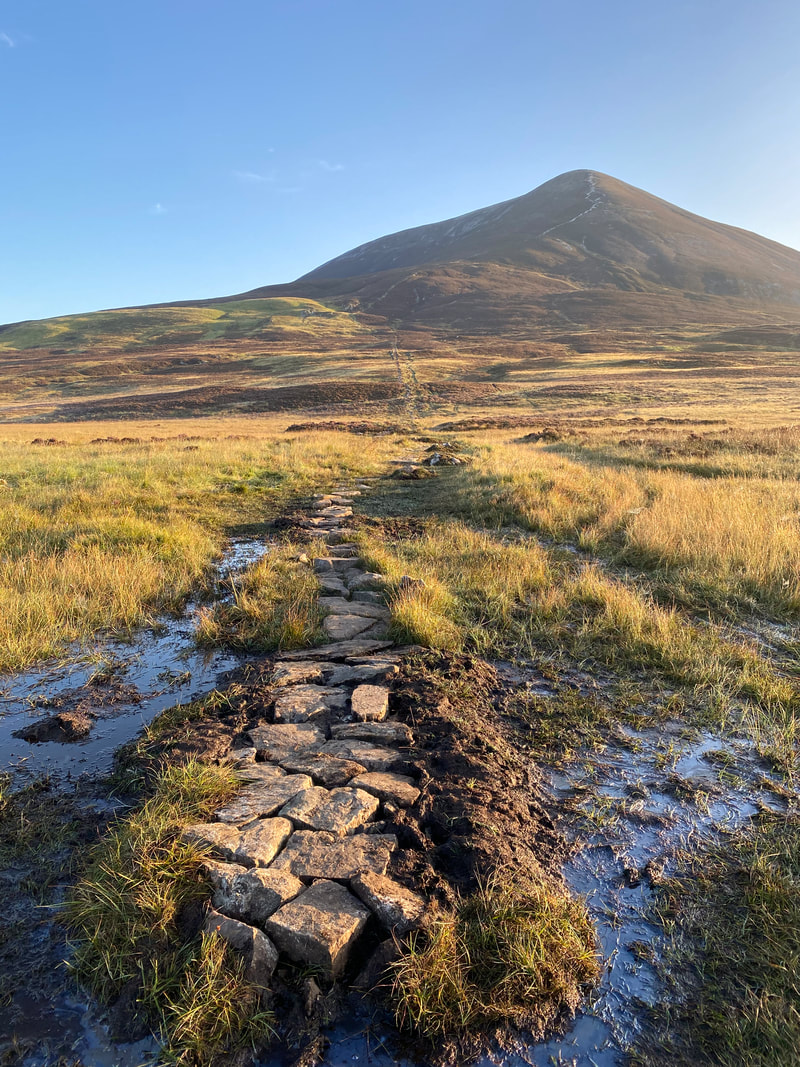
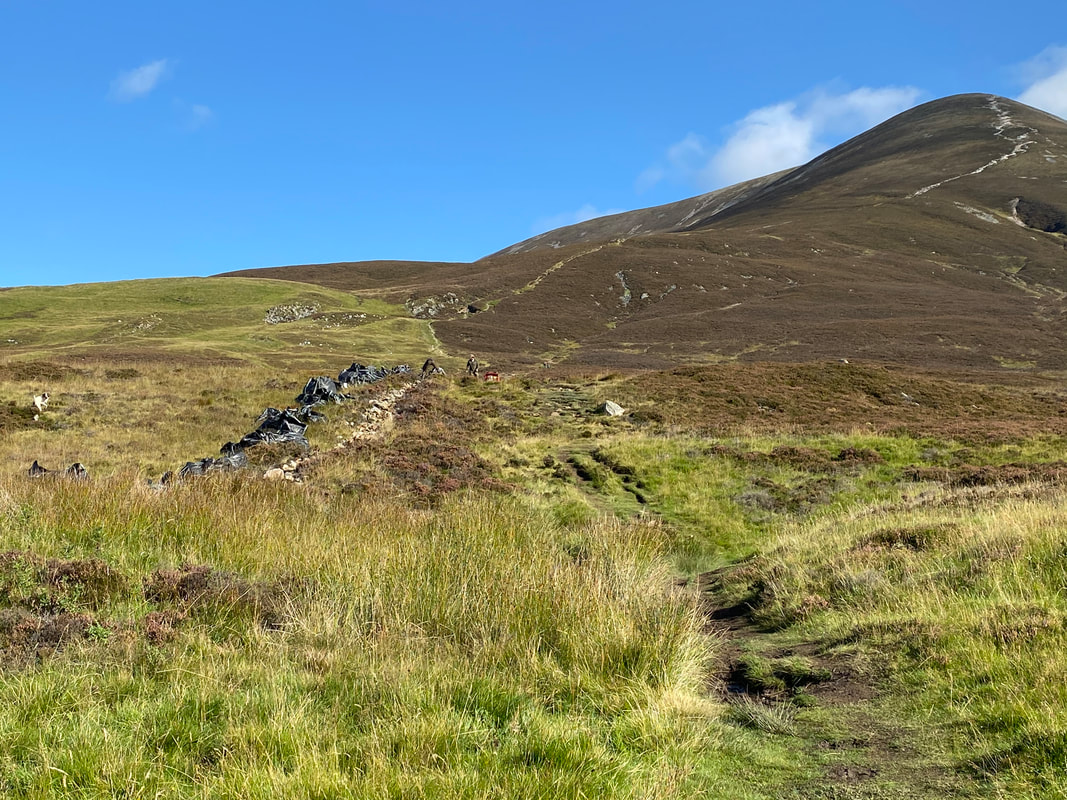
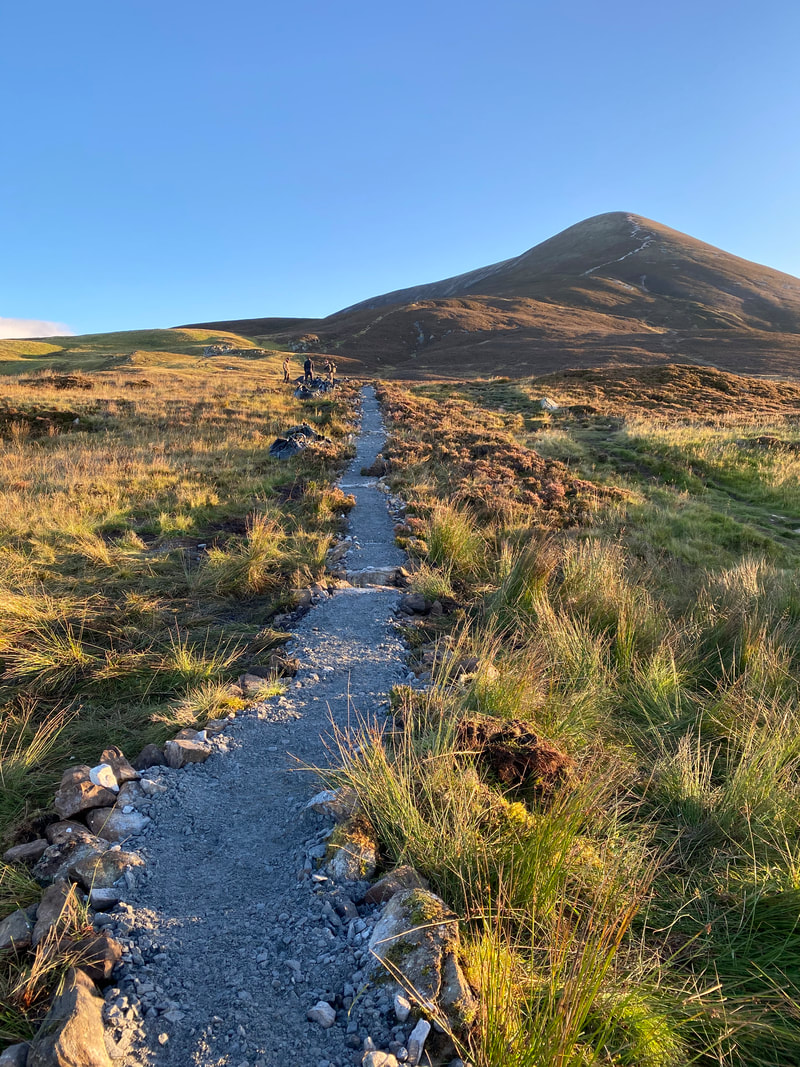
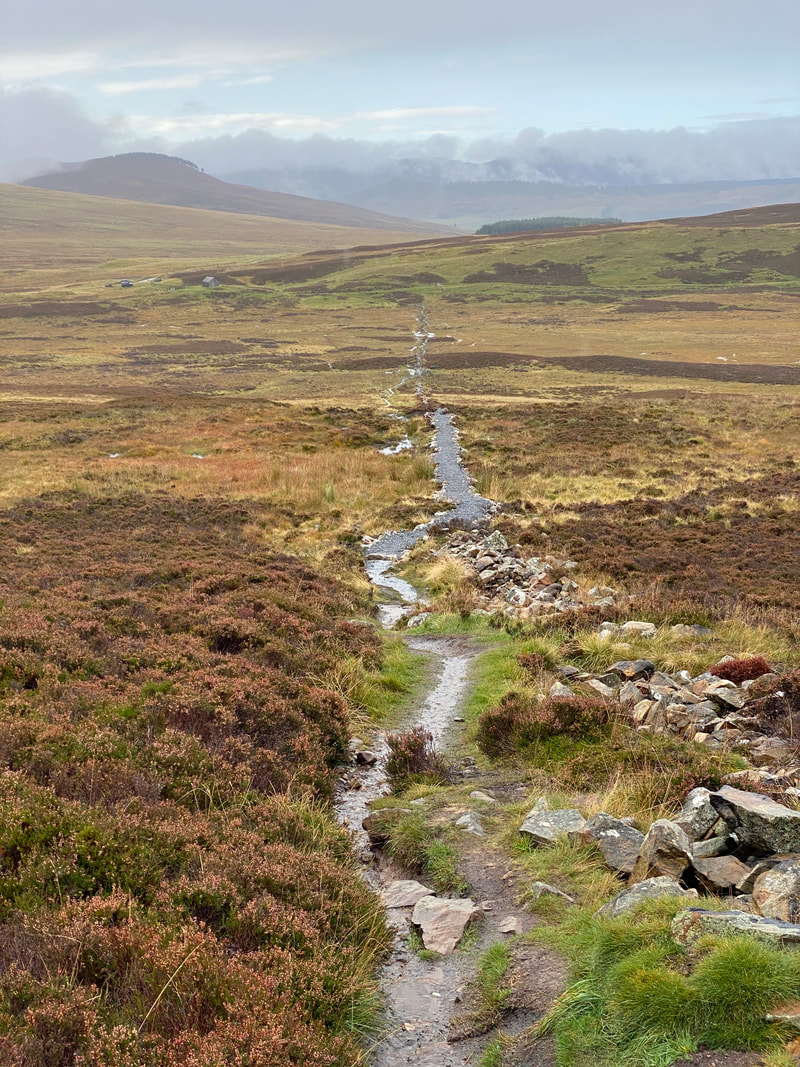
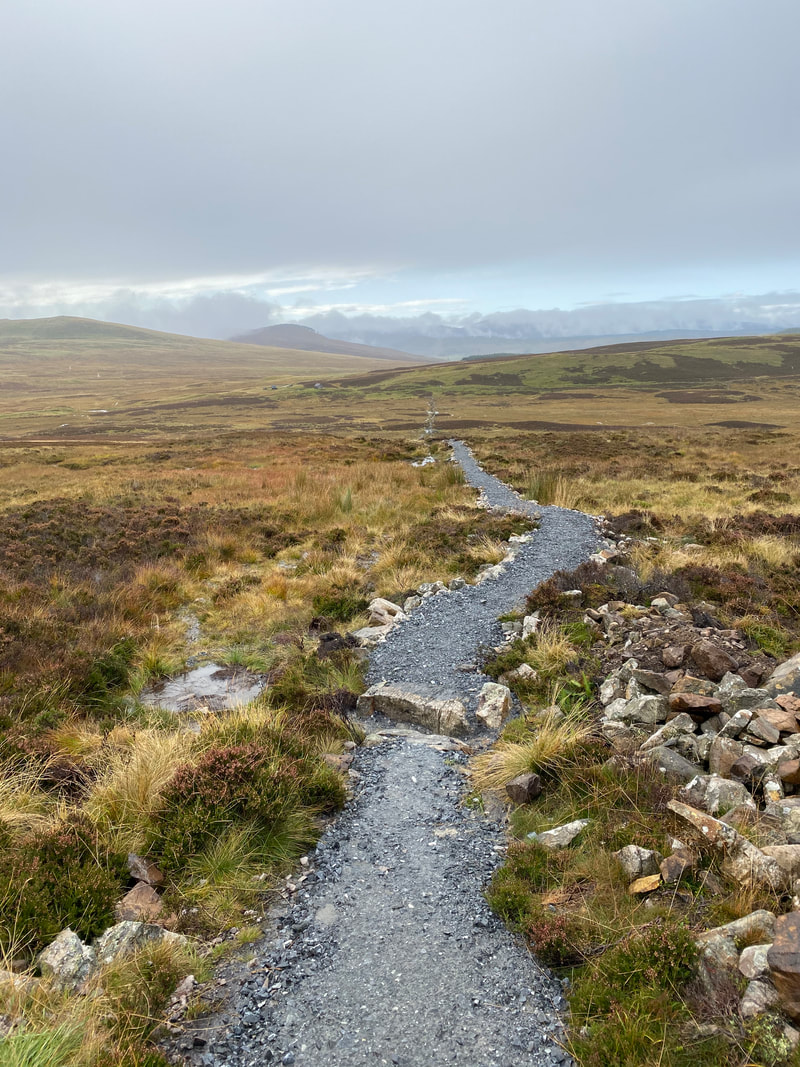
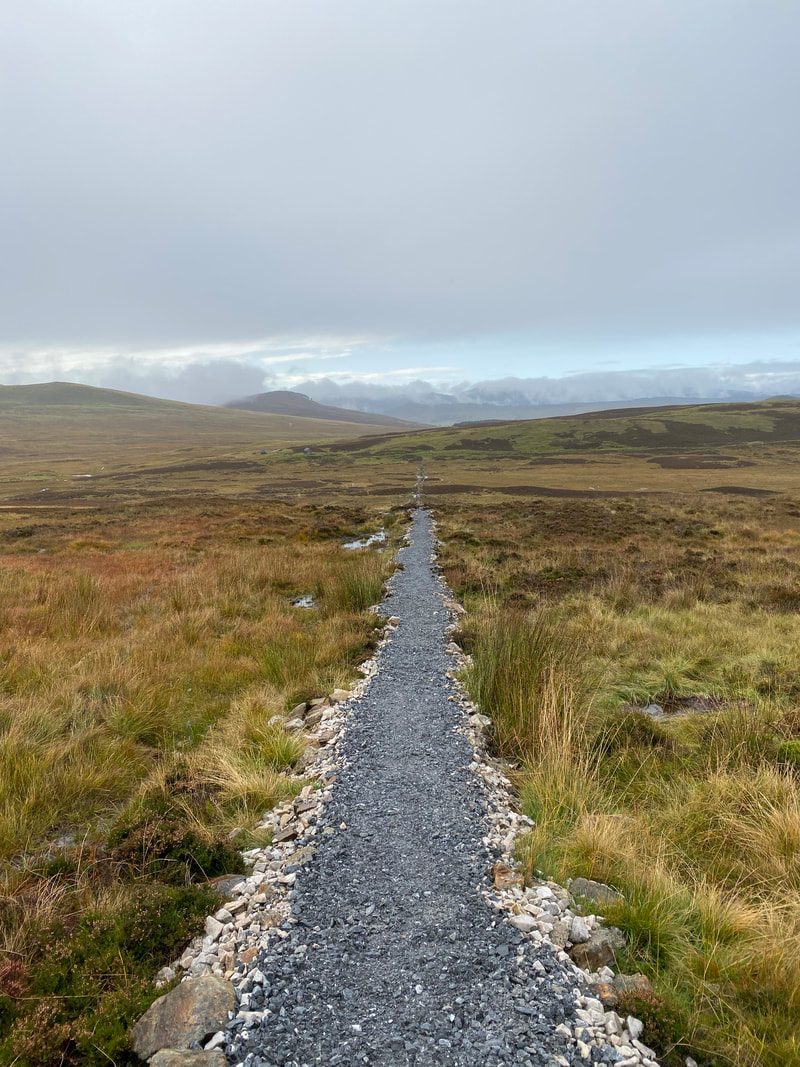
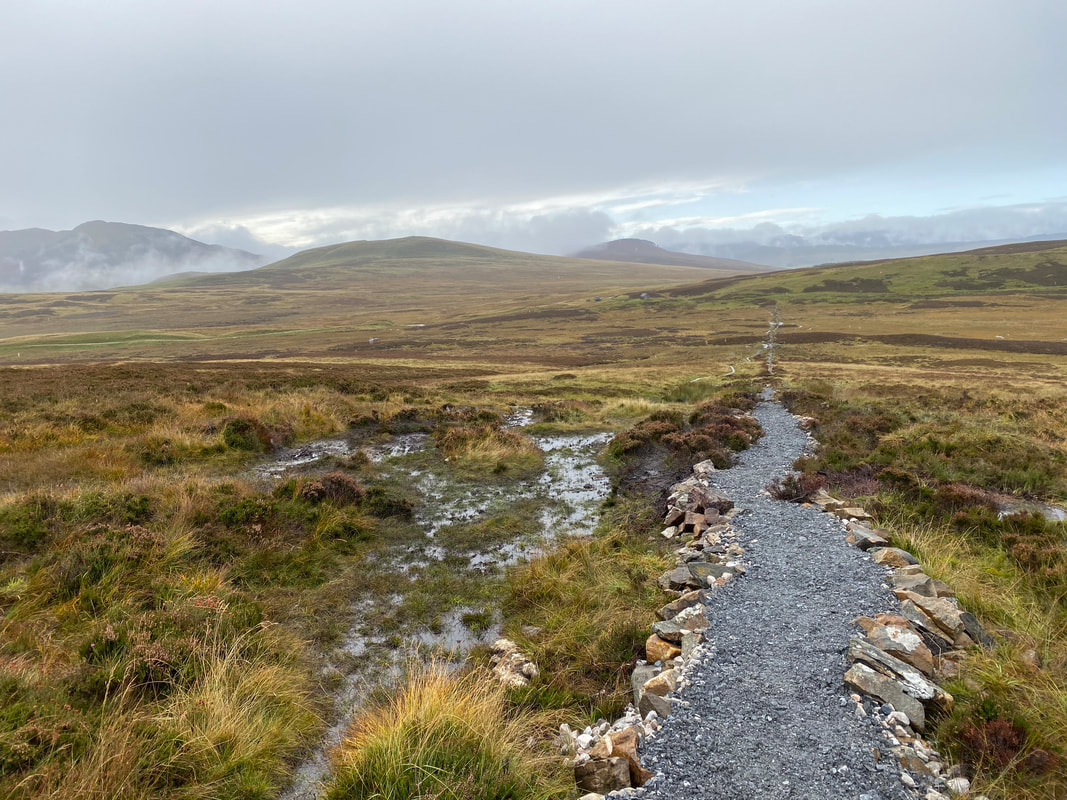
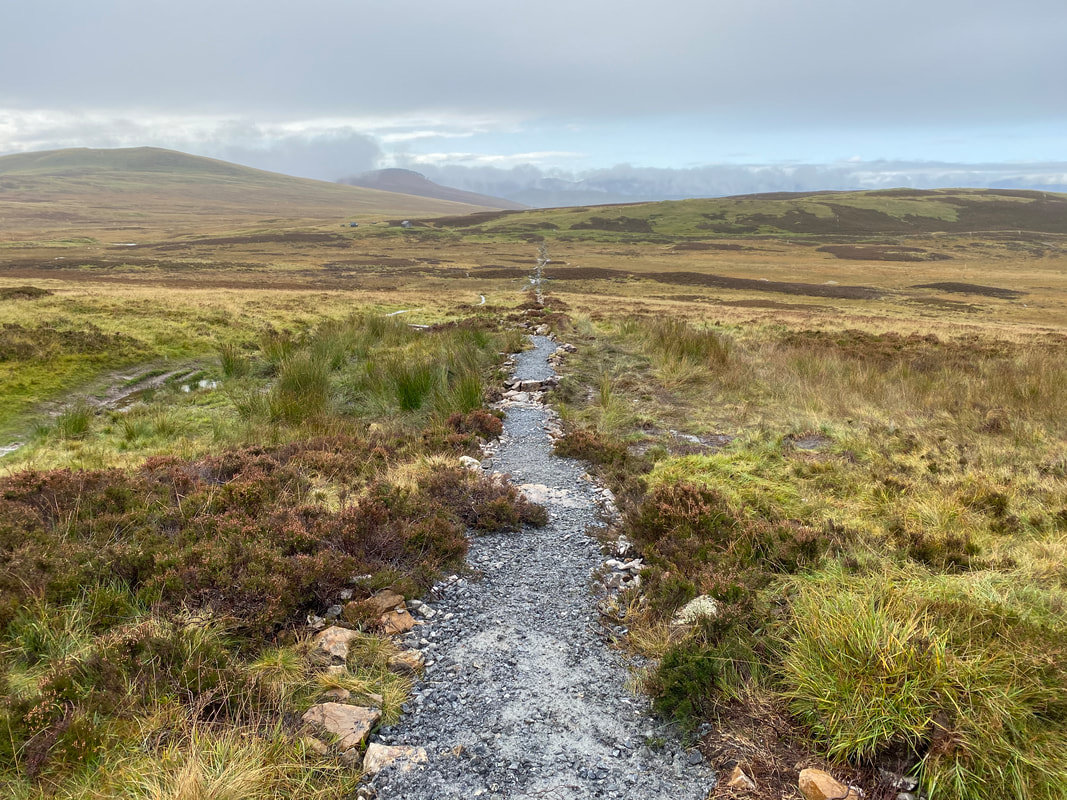
The Fen Path was broken into 2 main sections of work, the upper section which followed the line of the old dyke involved turning that old dismantled dyke into a new path in areas where the existing trod had become badly damaged.
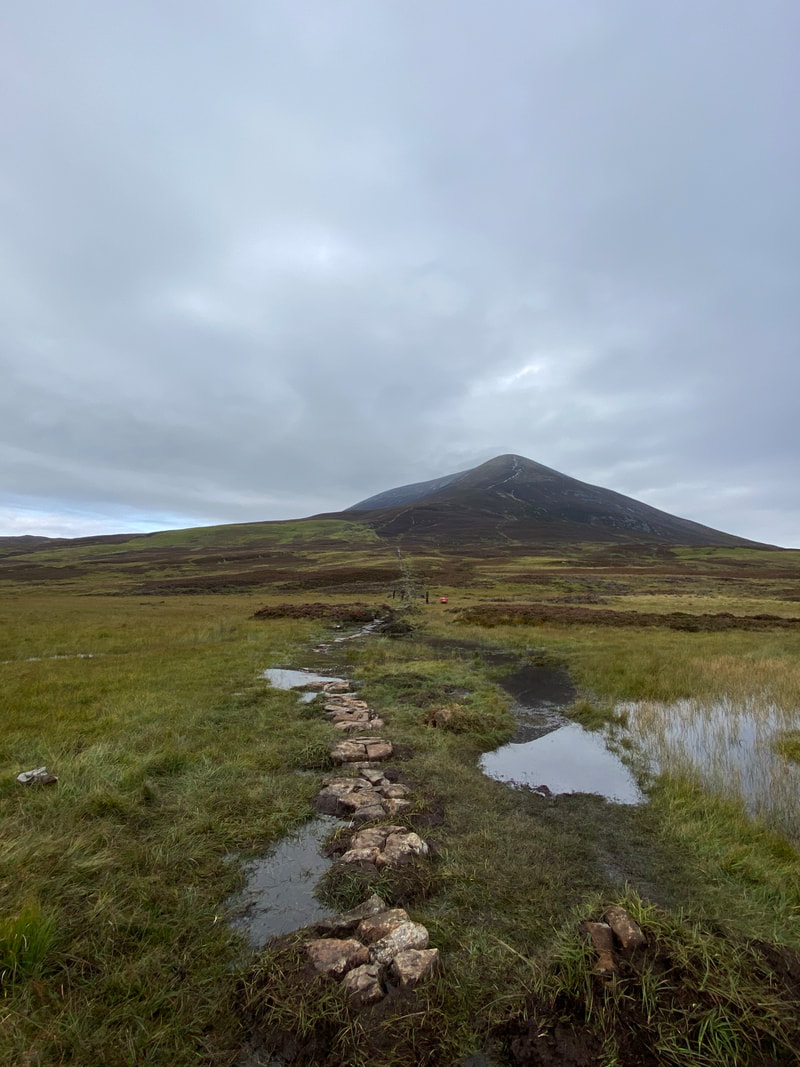
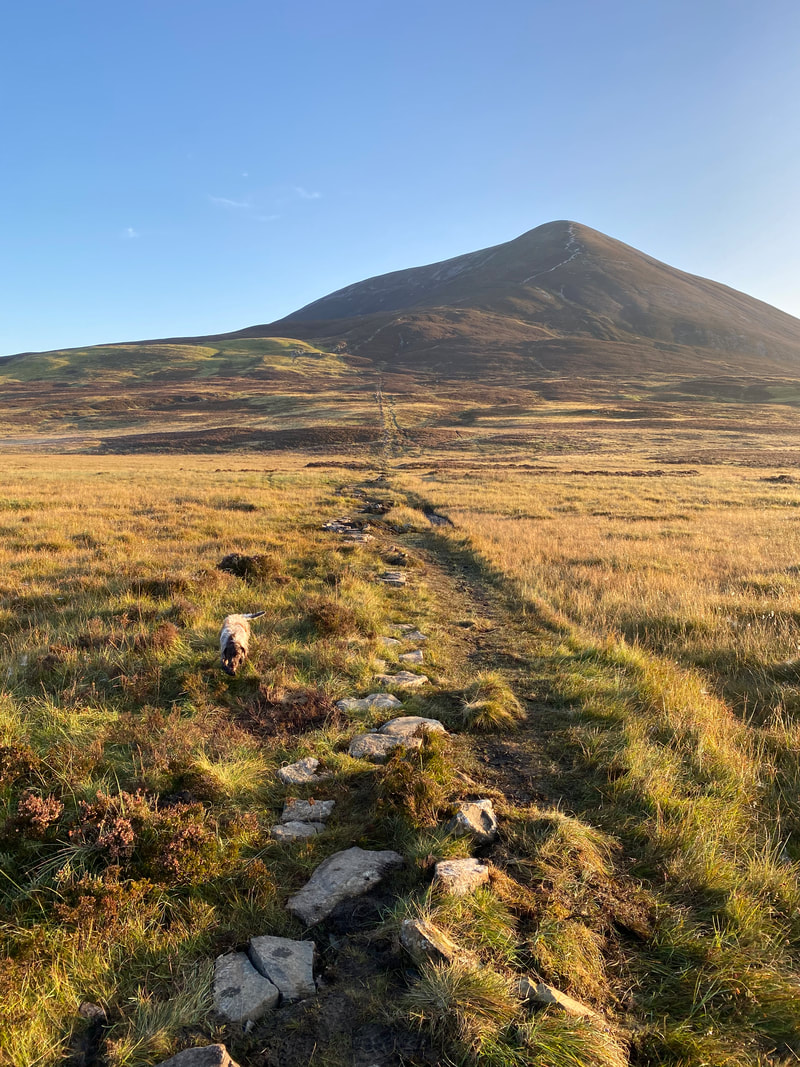
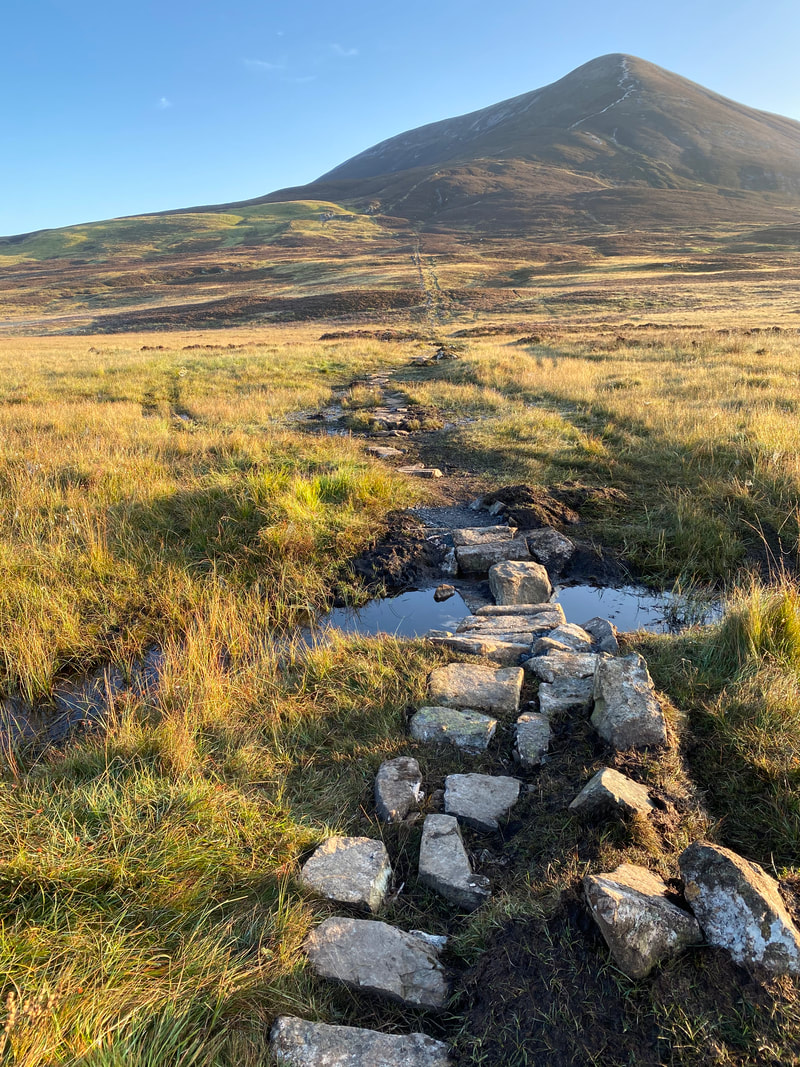
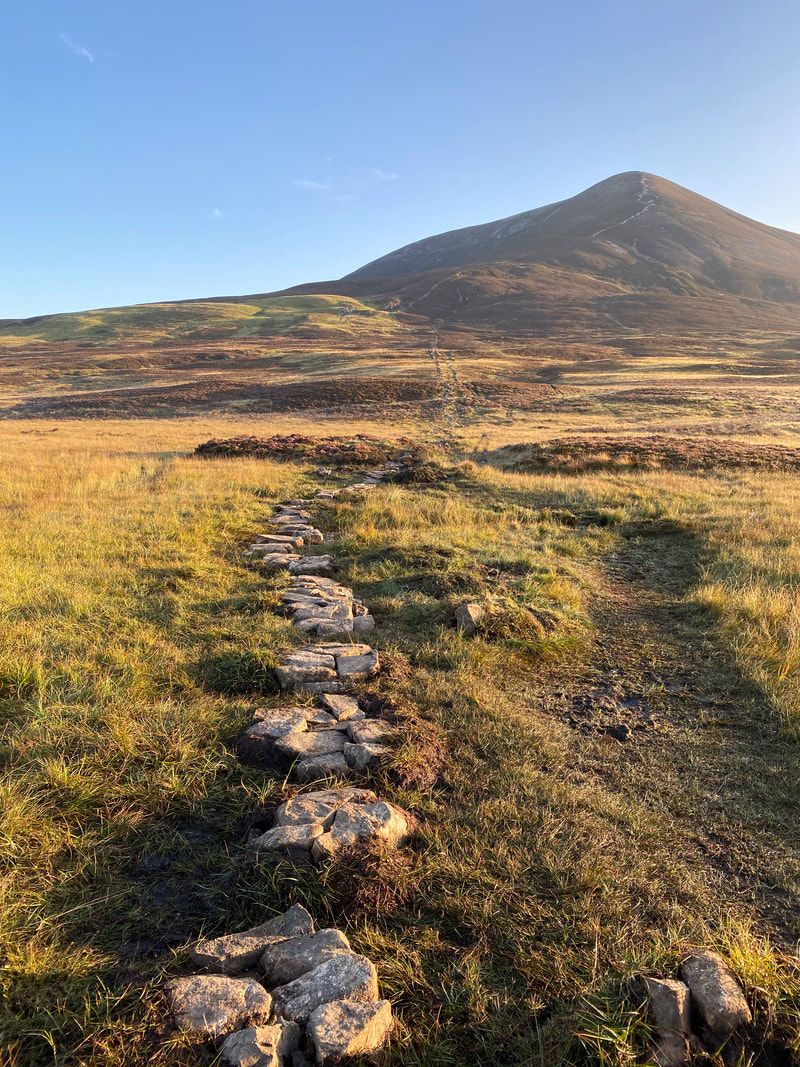
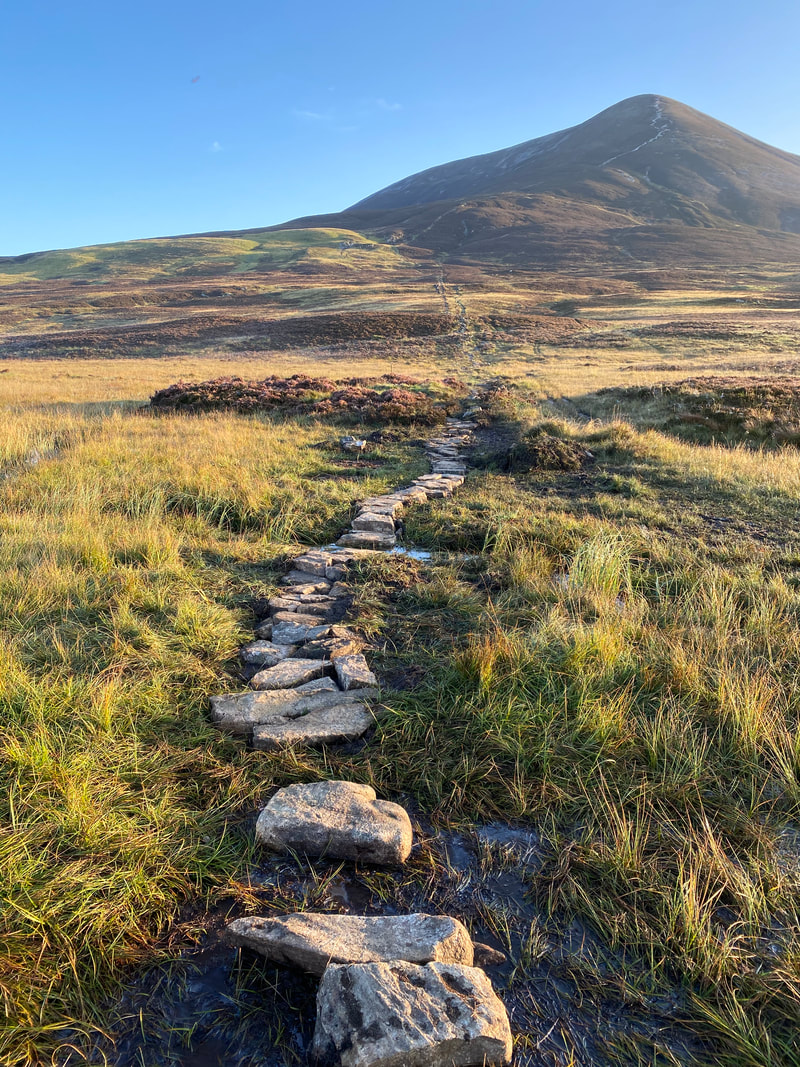
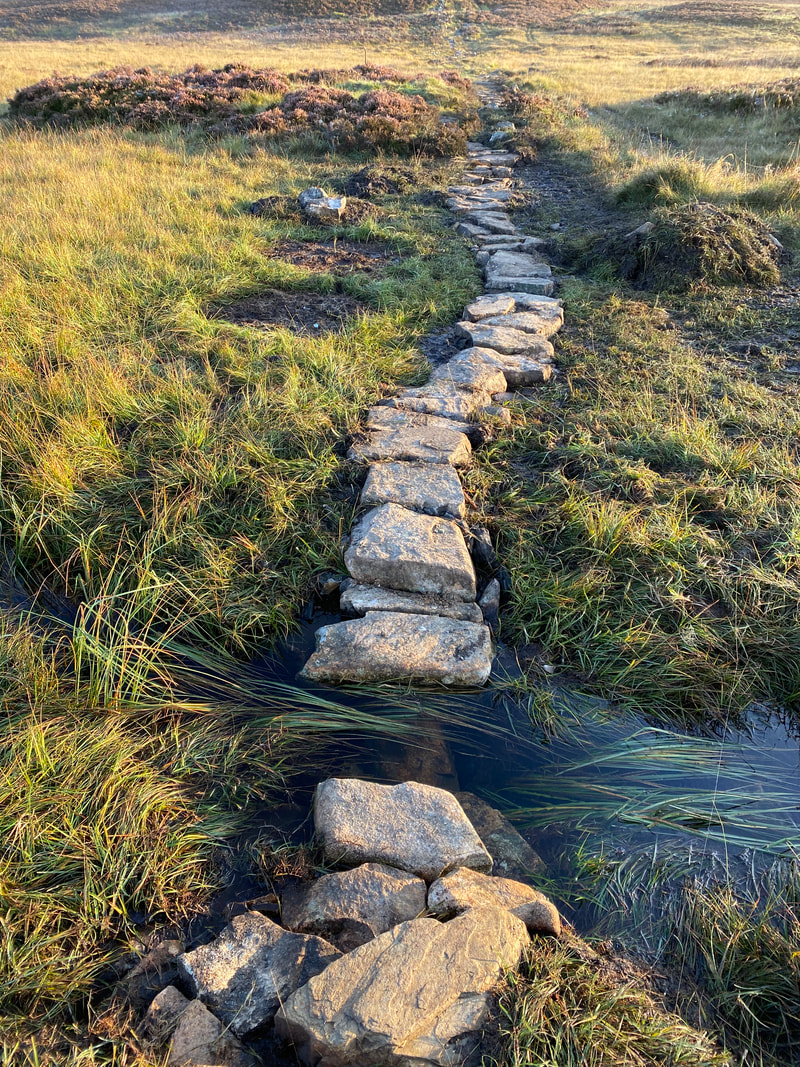
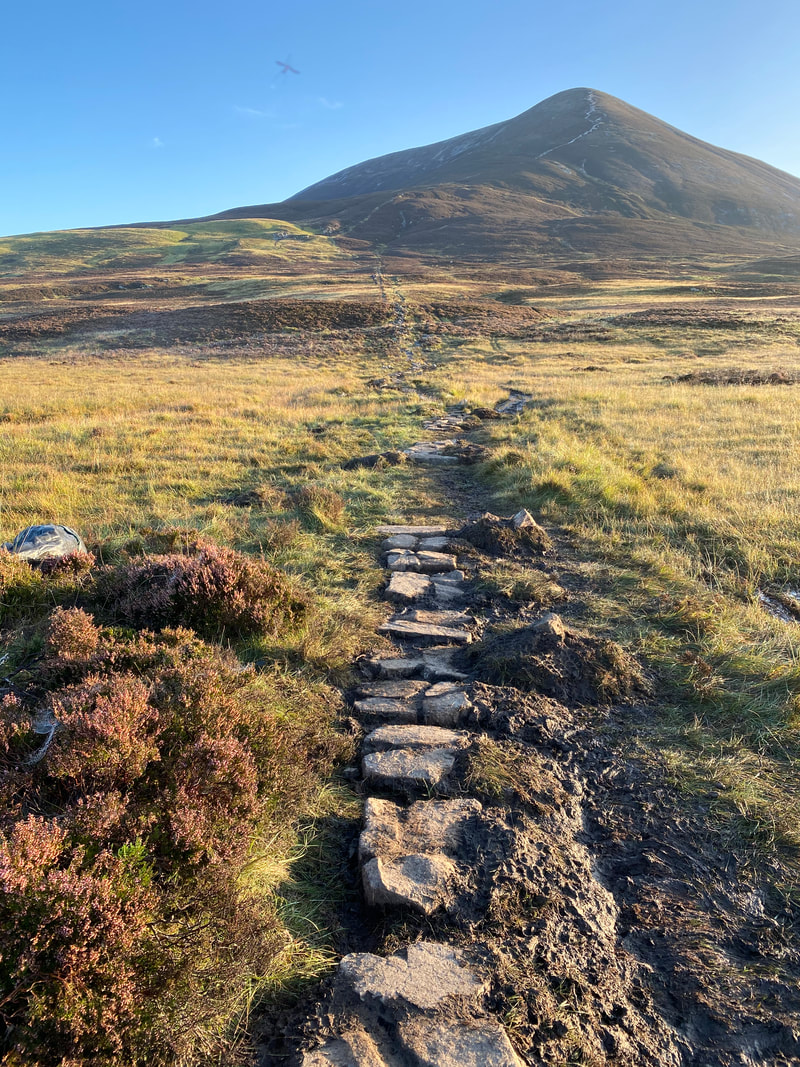
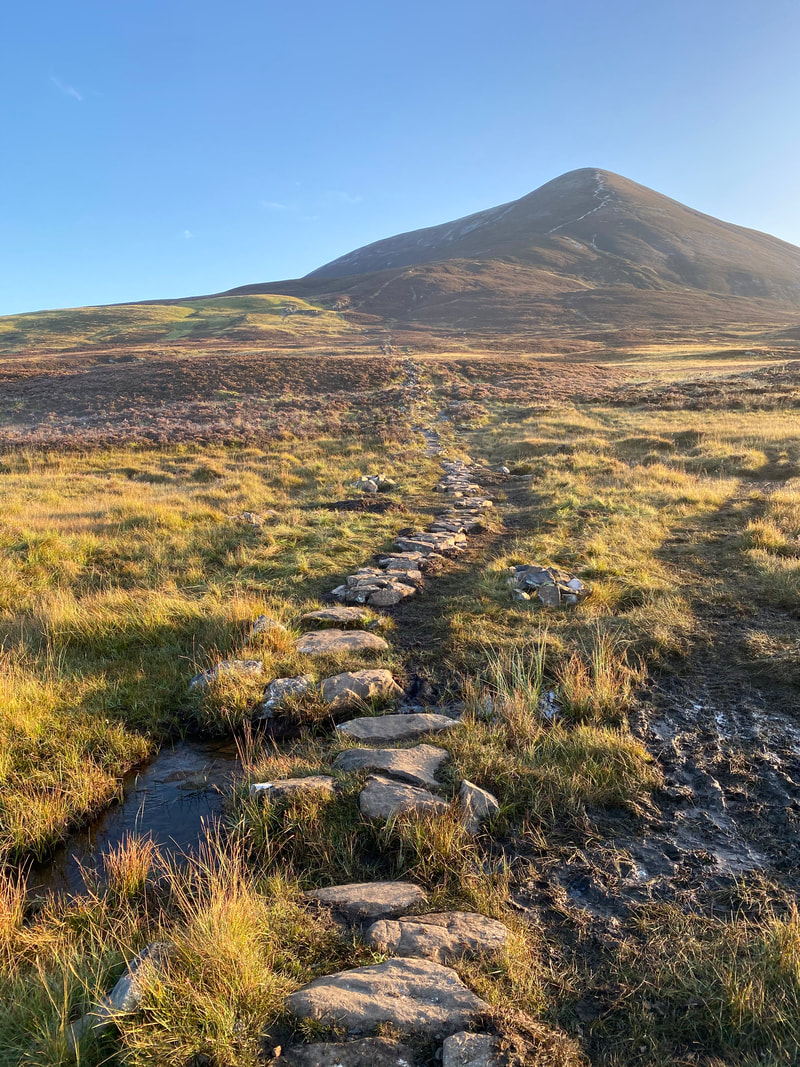
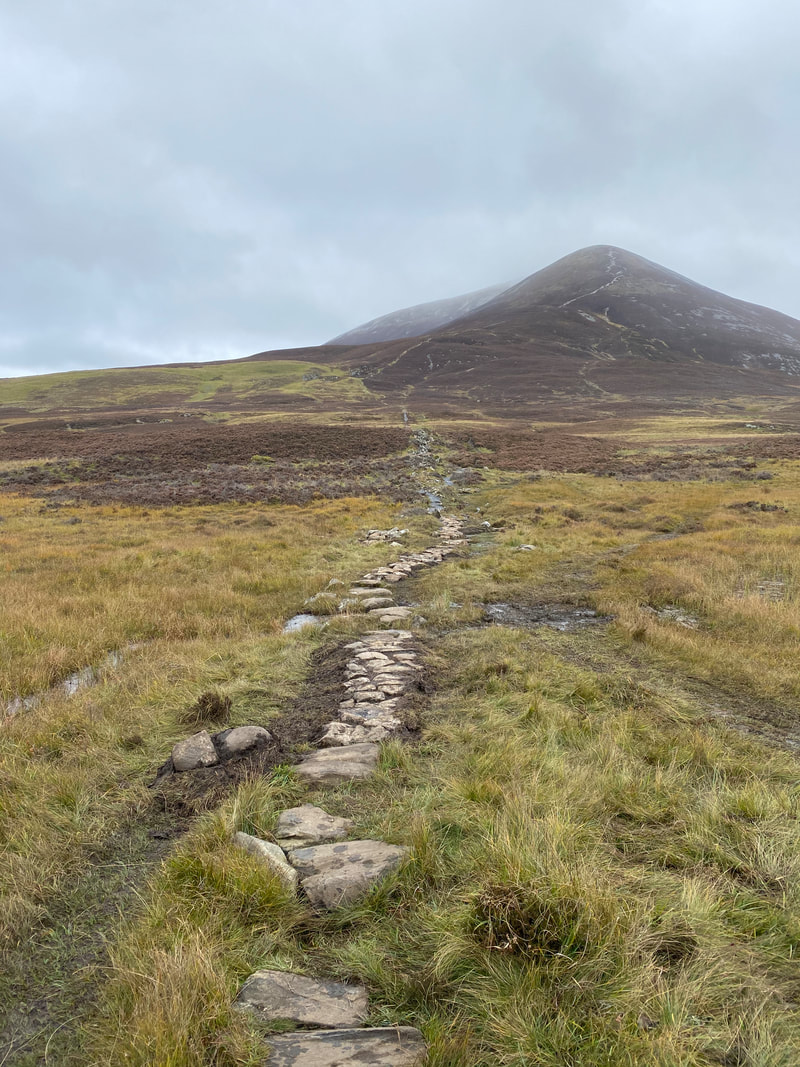
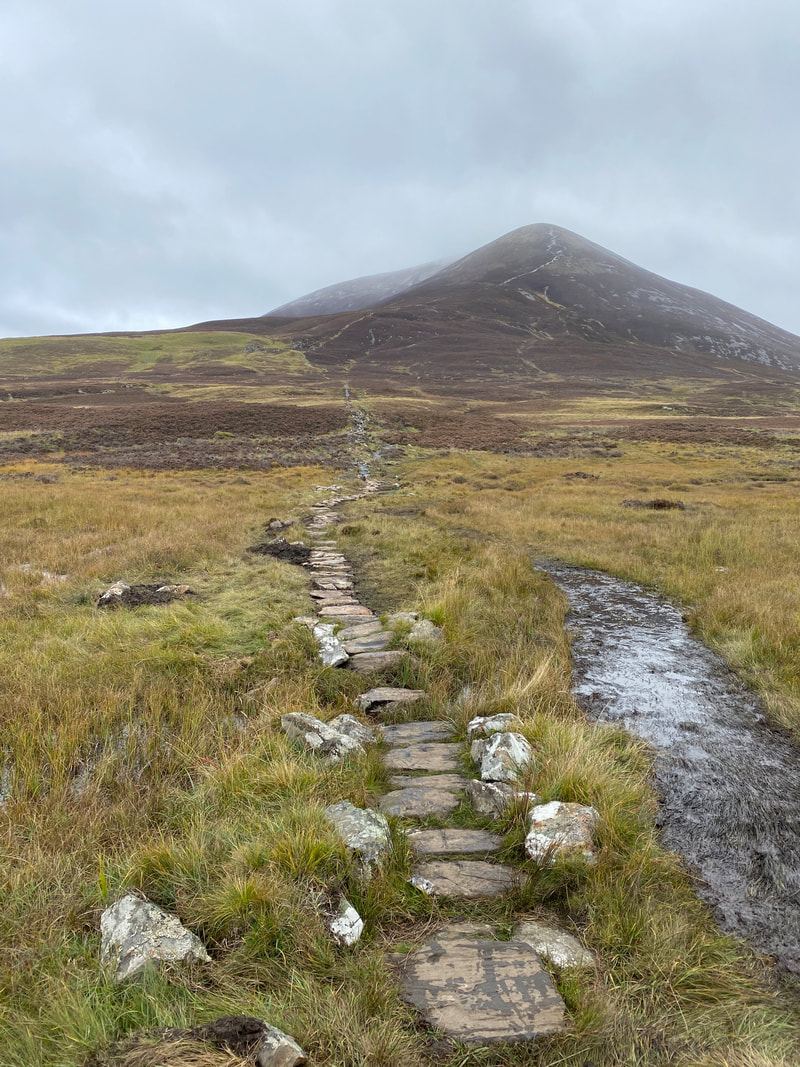
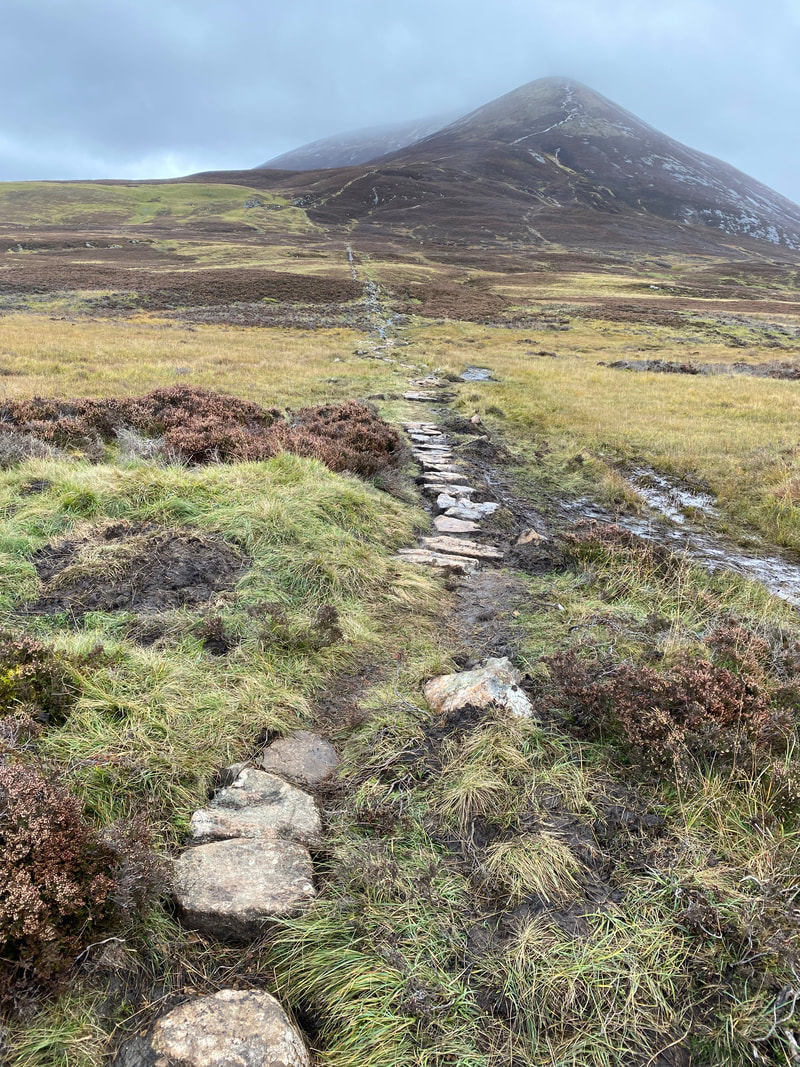
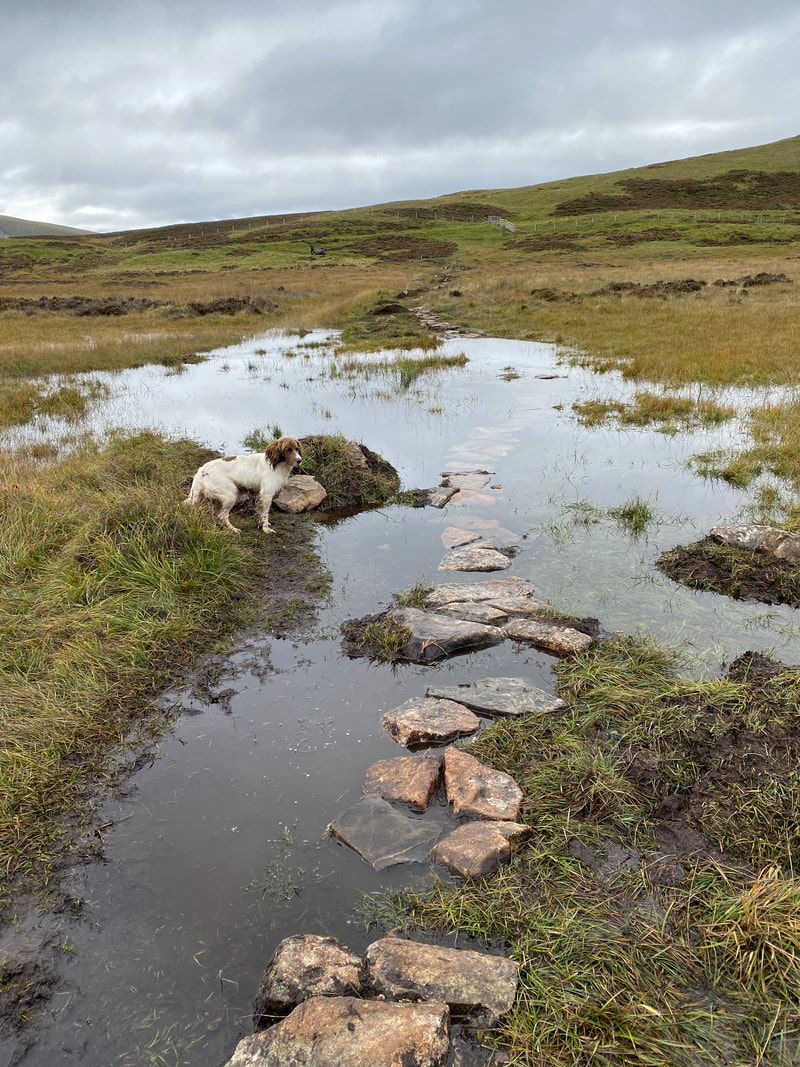
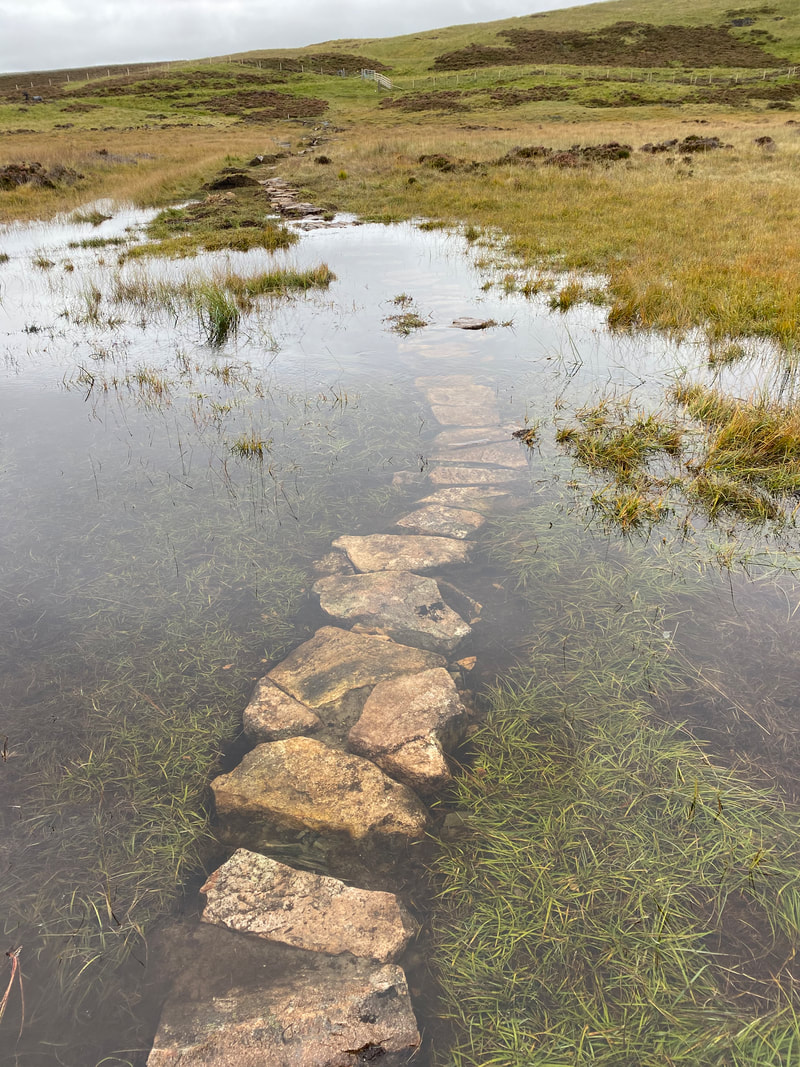
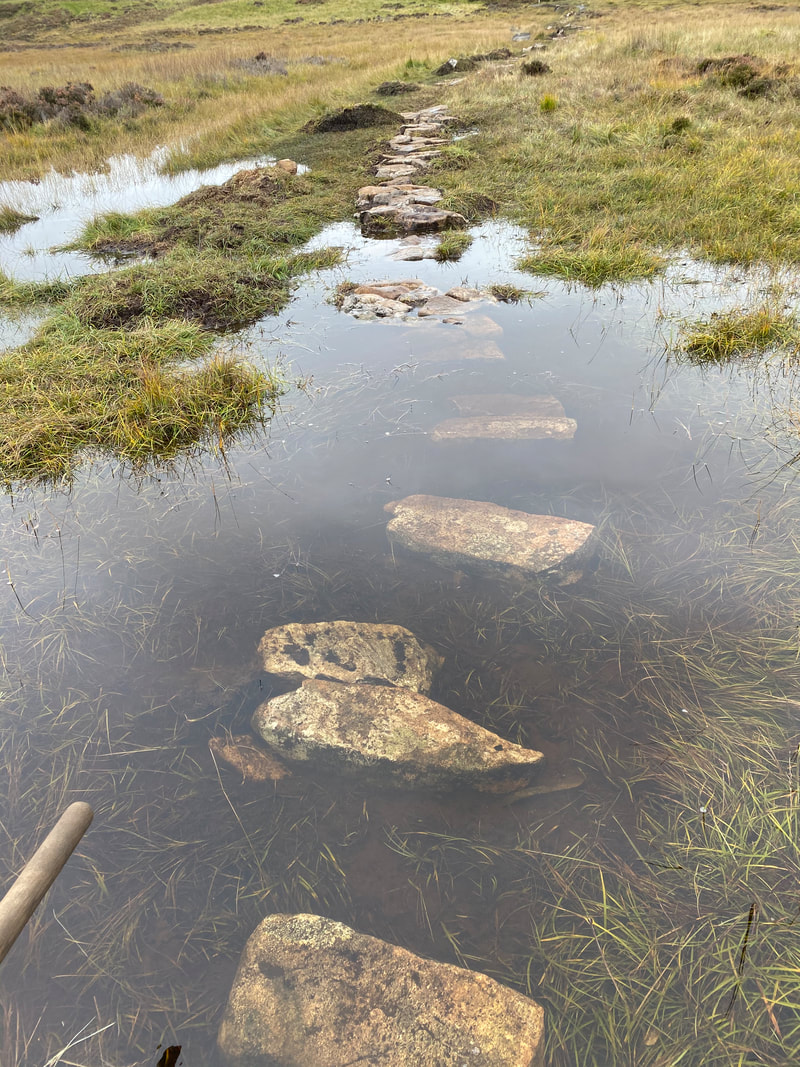
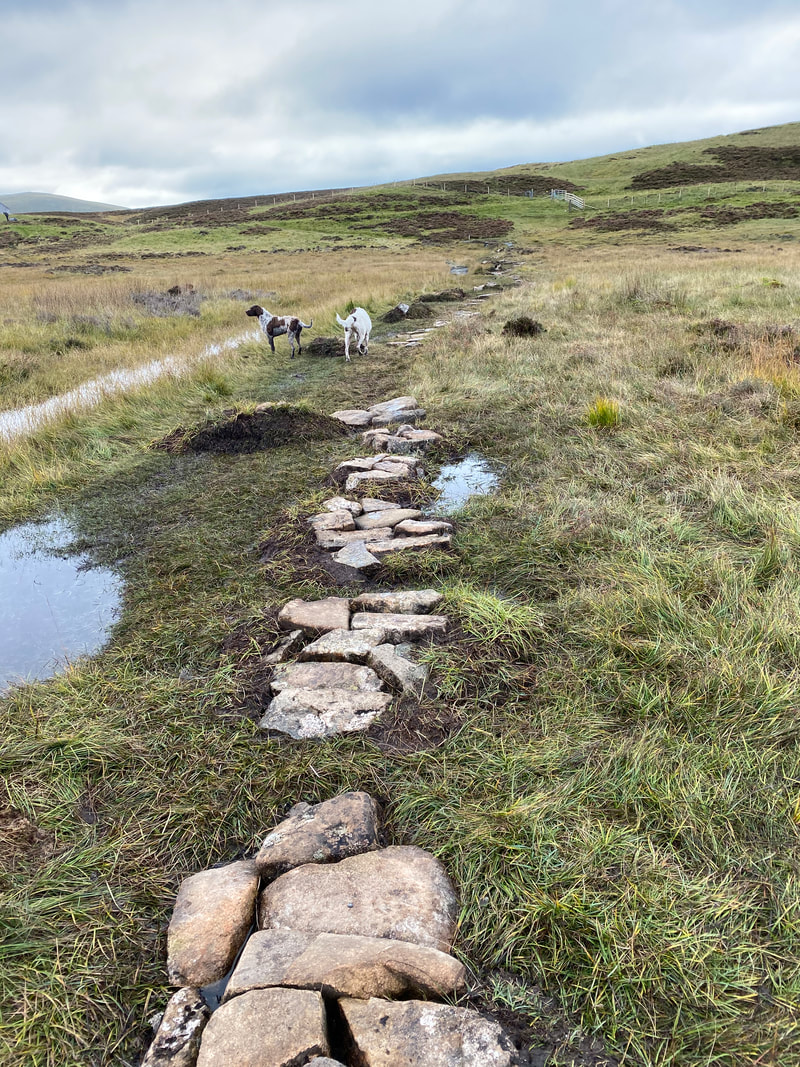
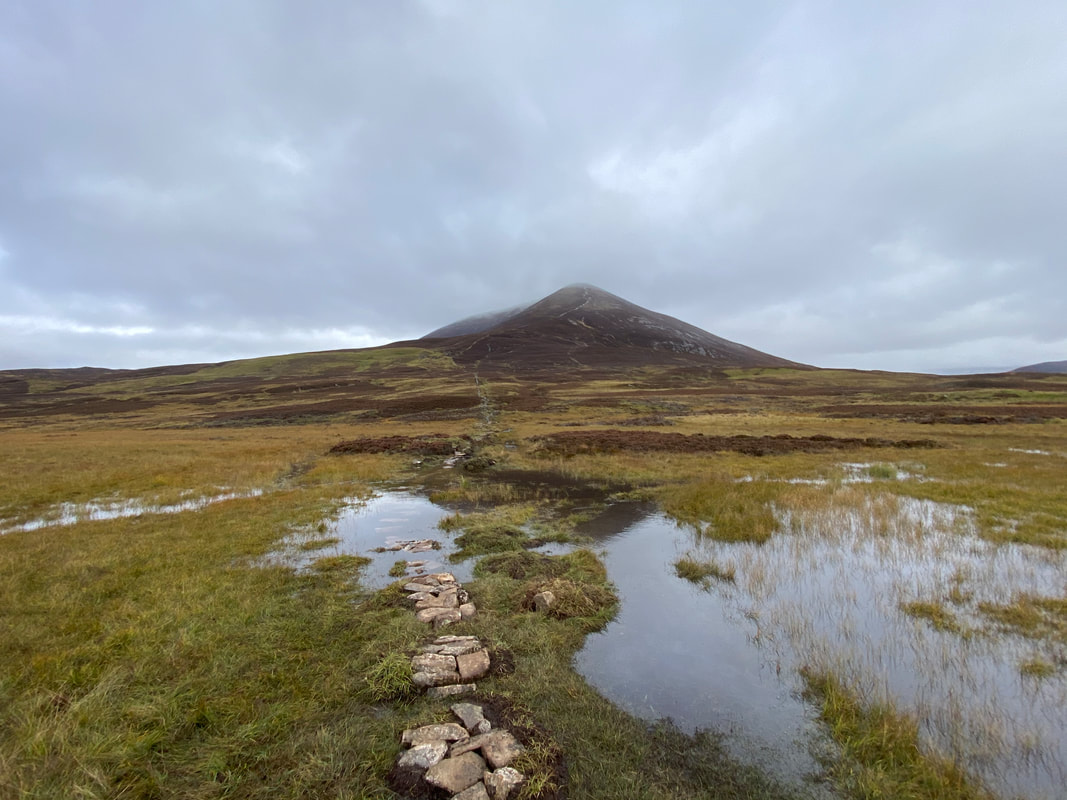
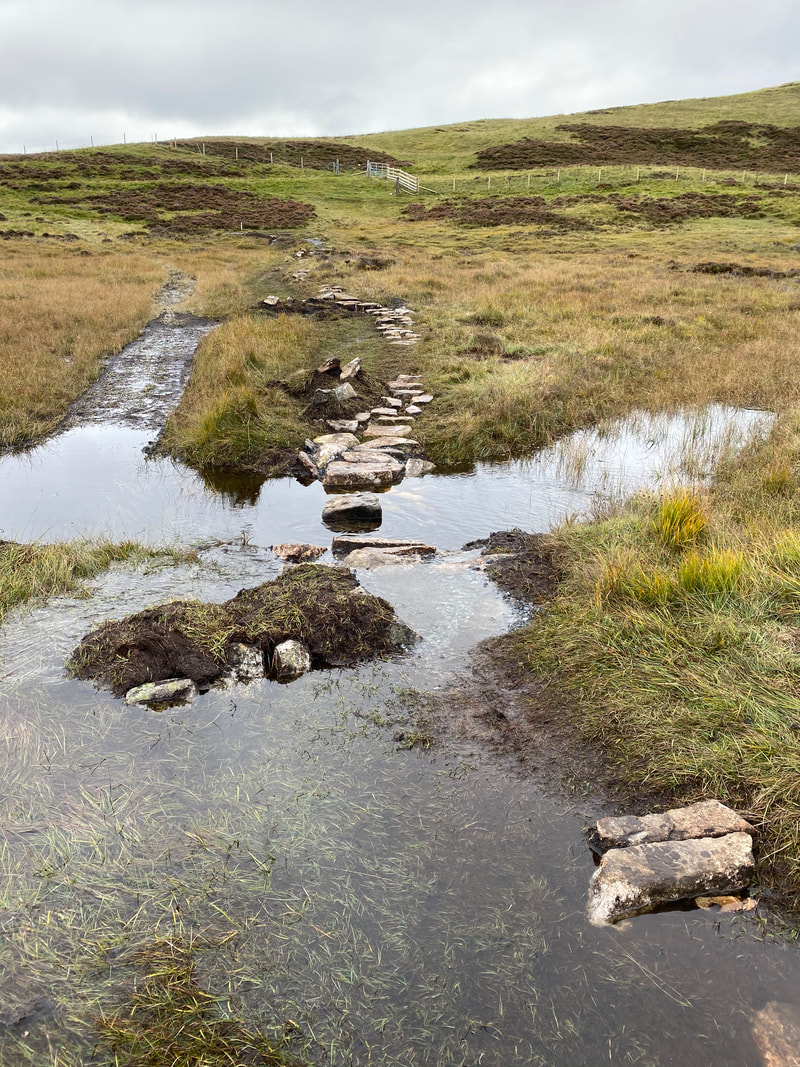
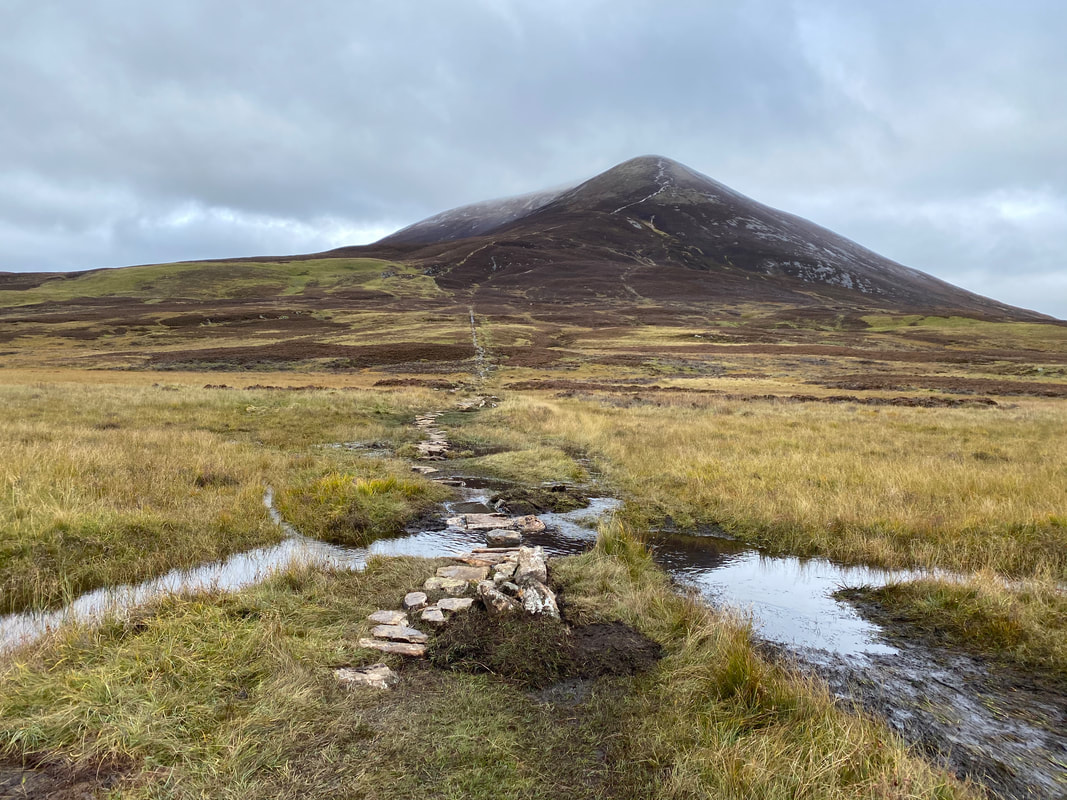
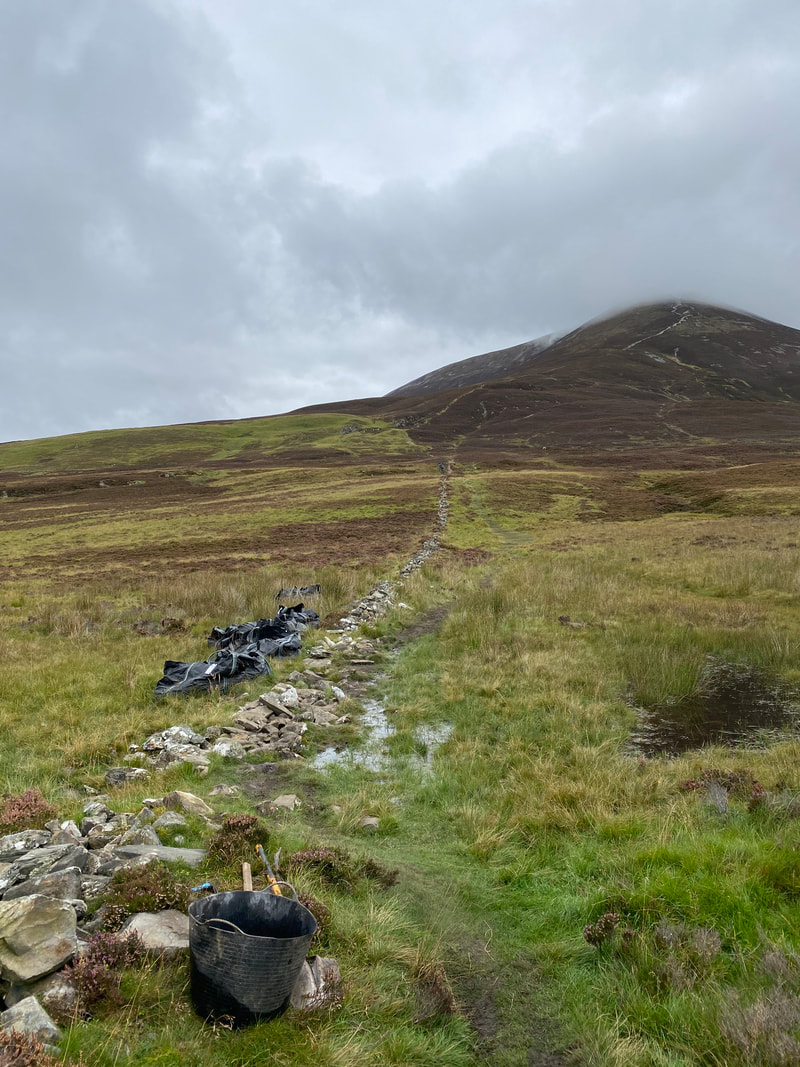
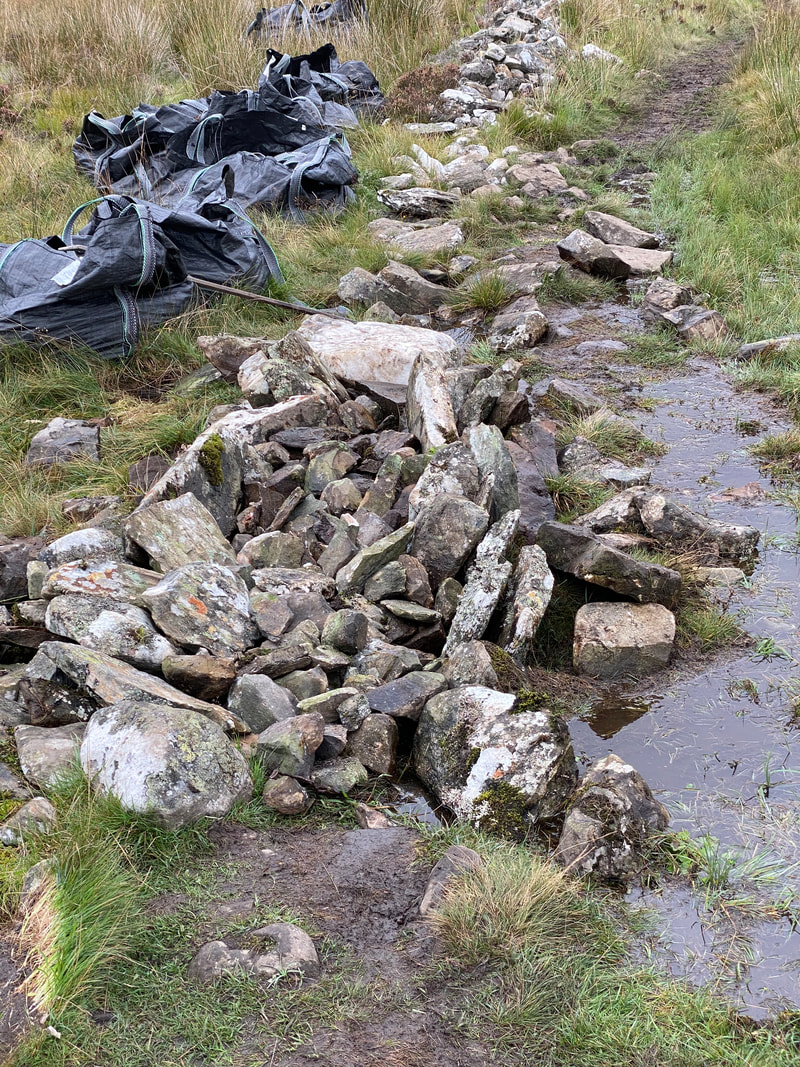
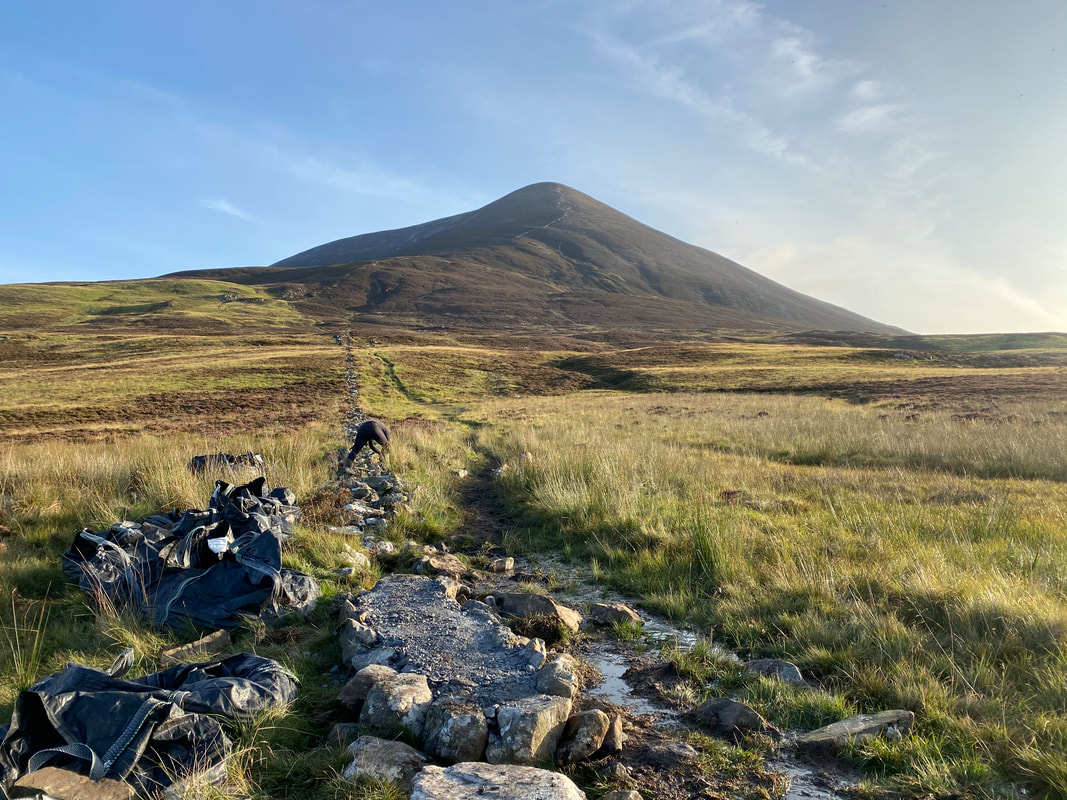
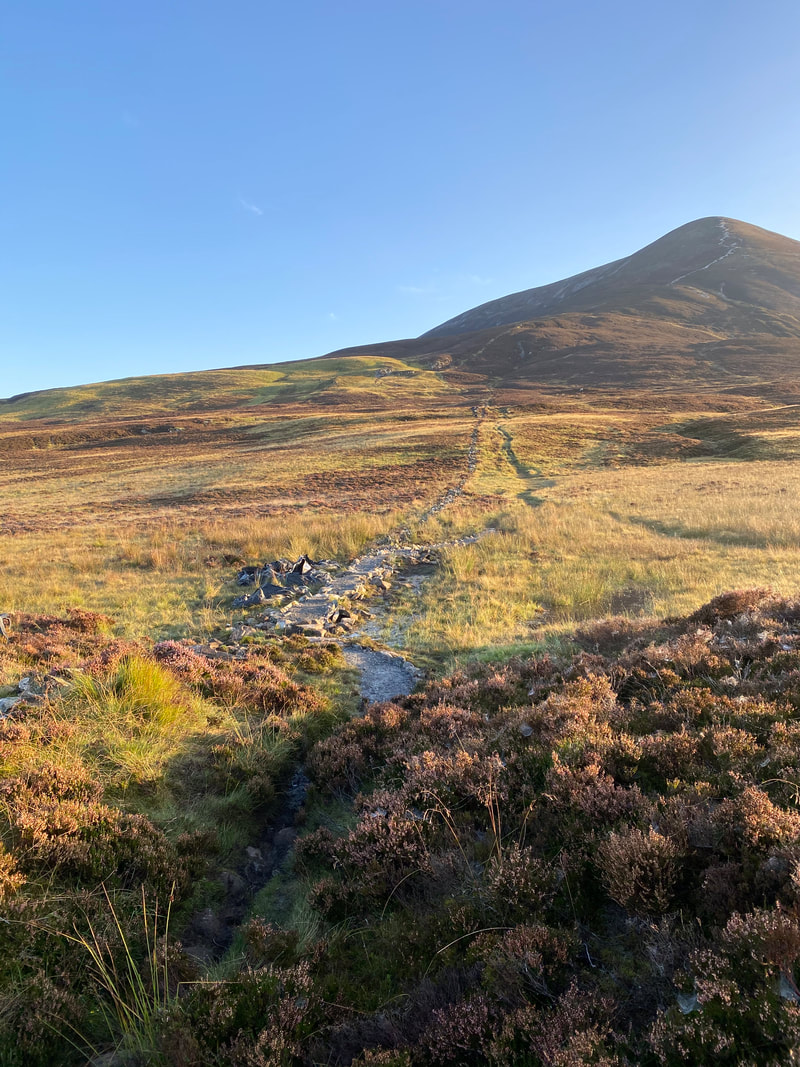
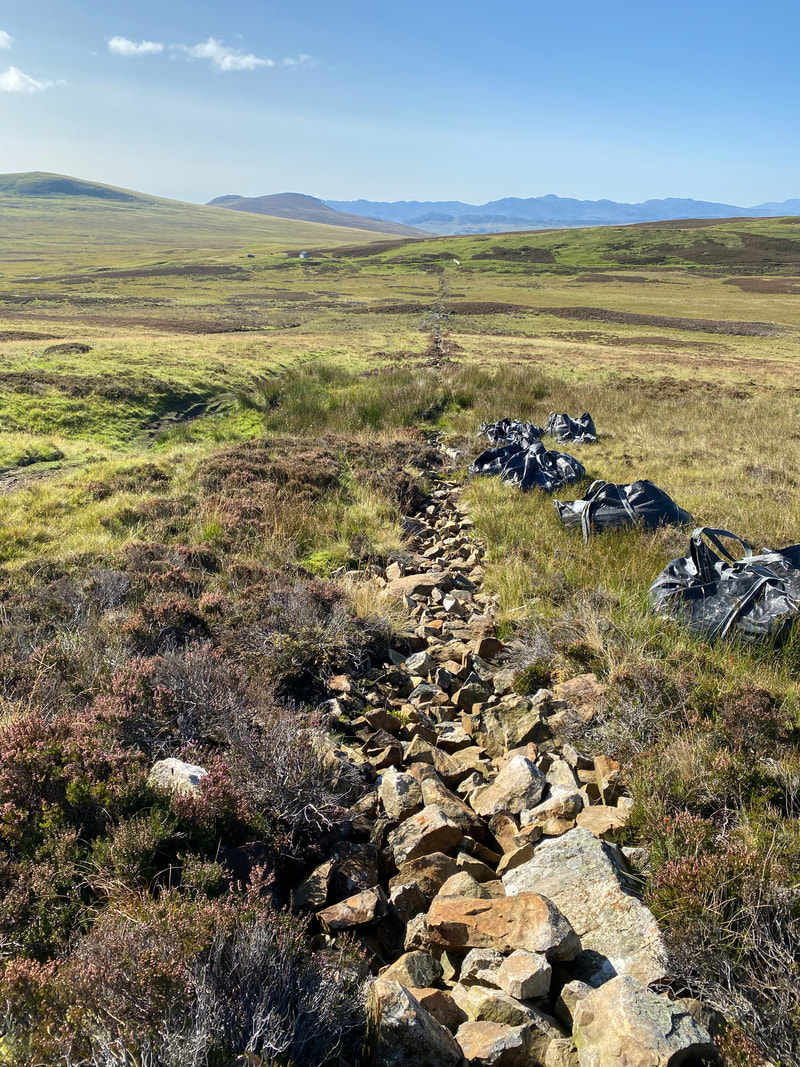
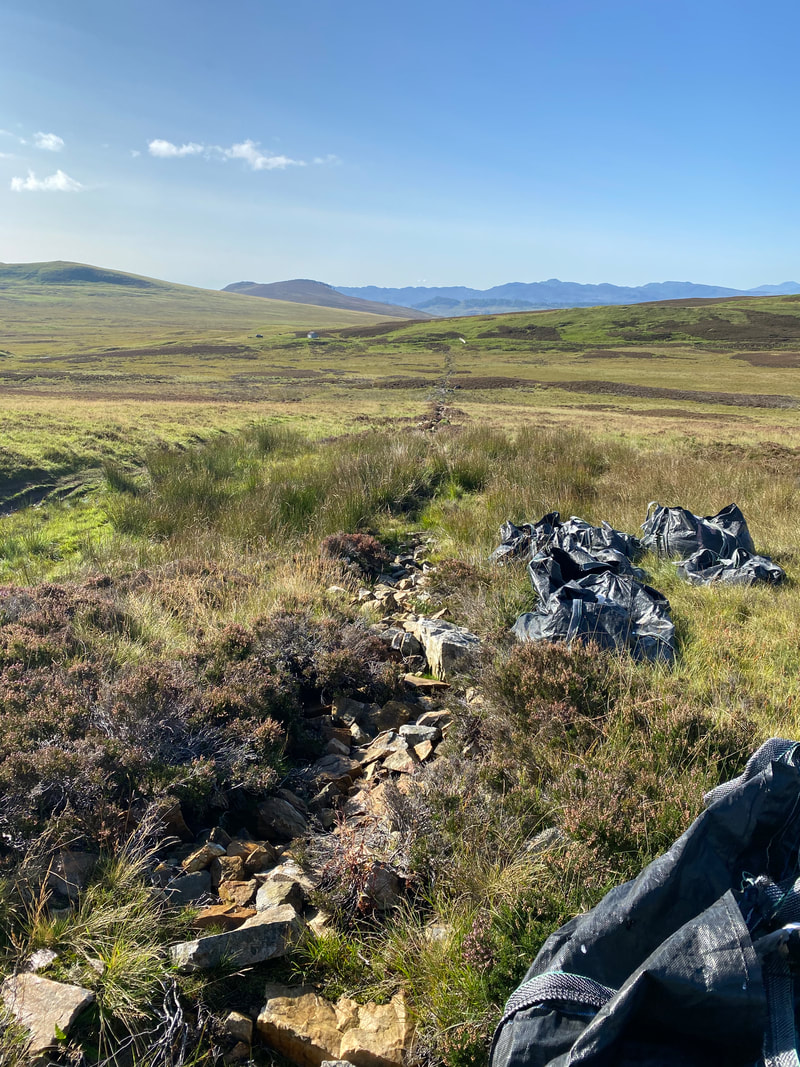
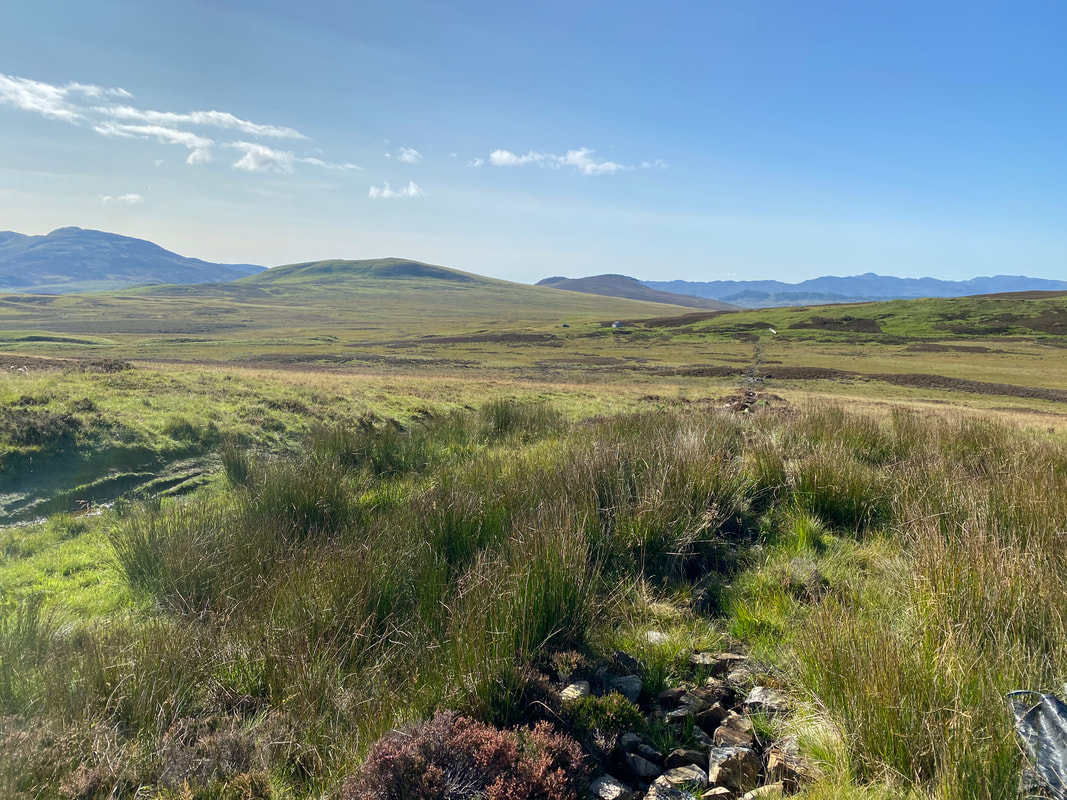
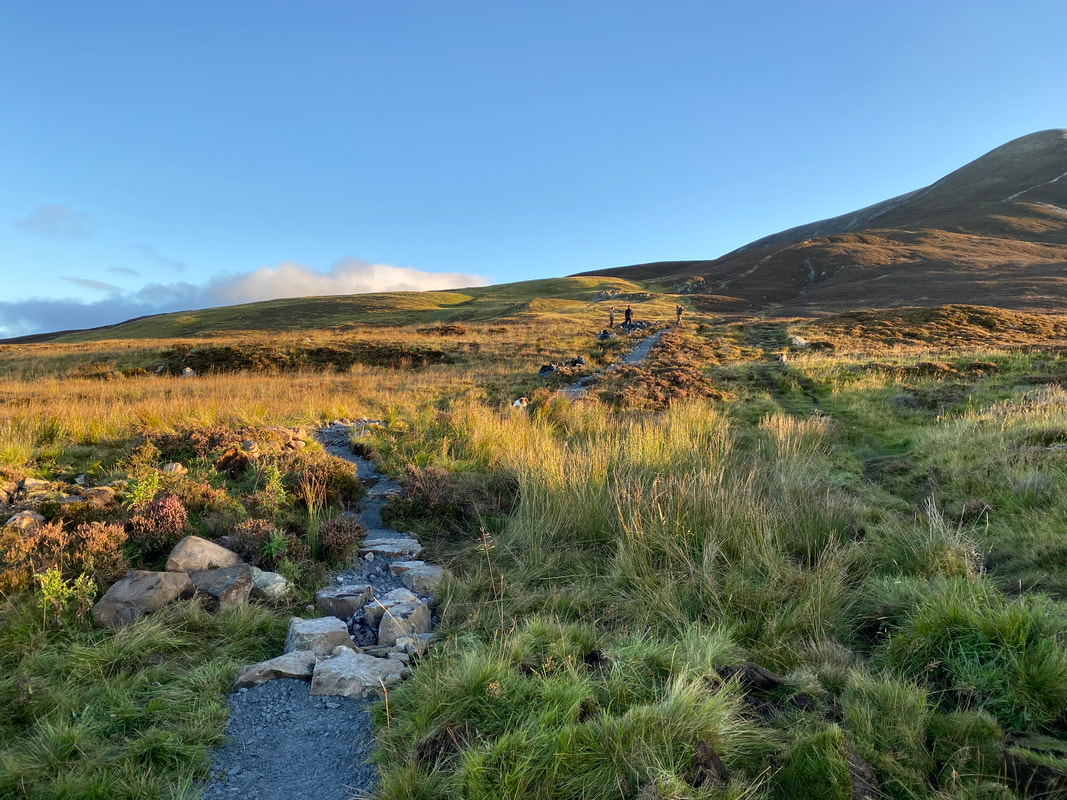
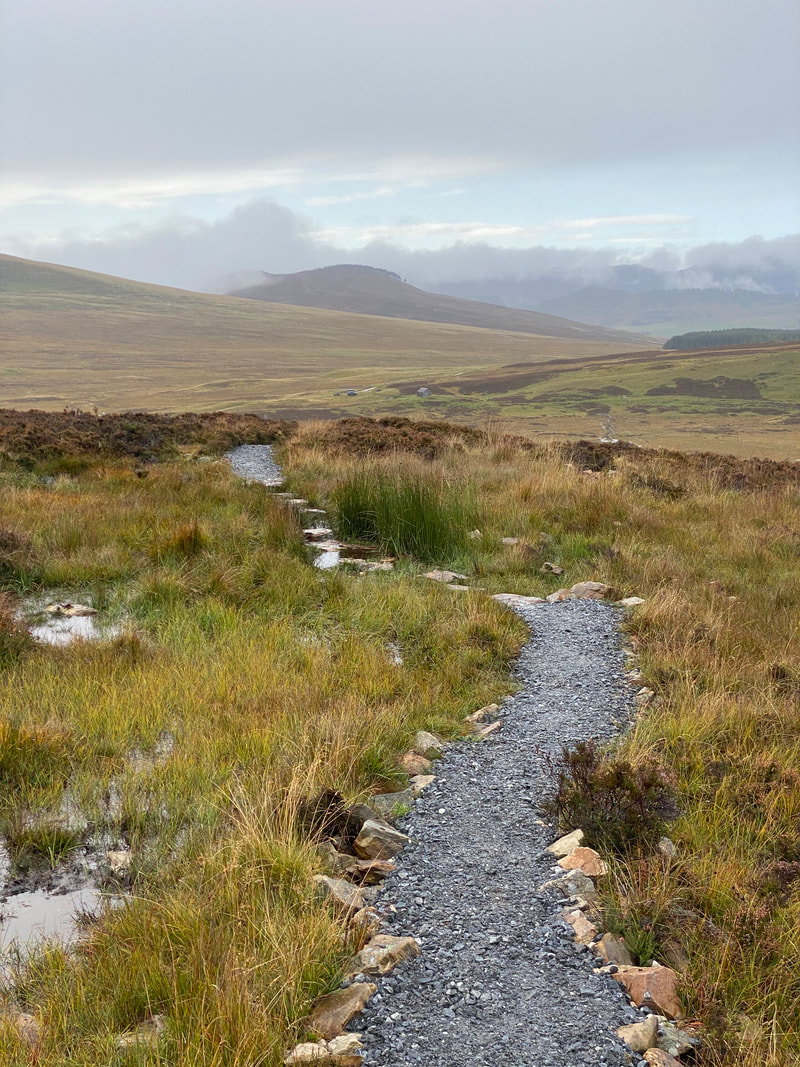
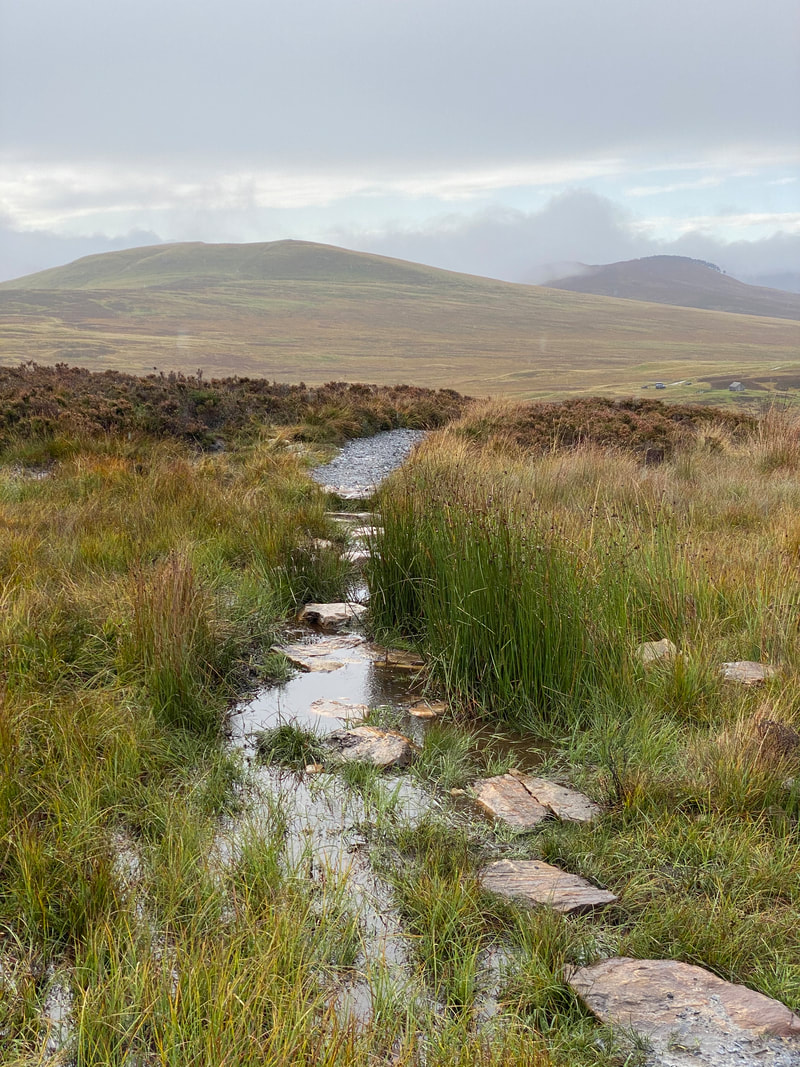
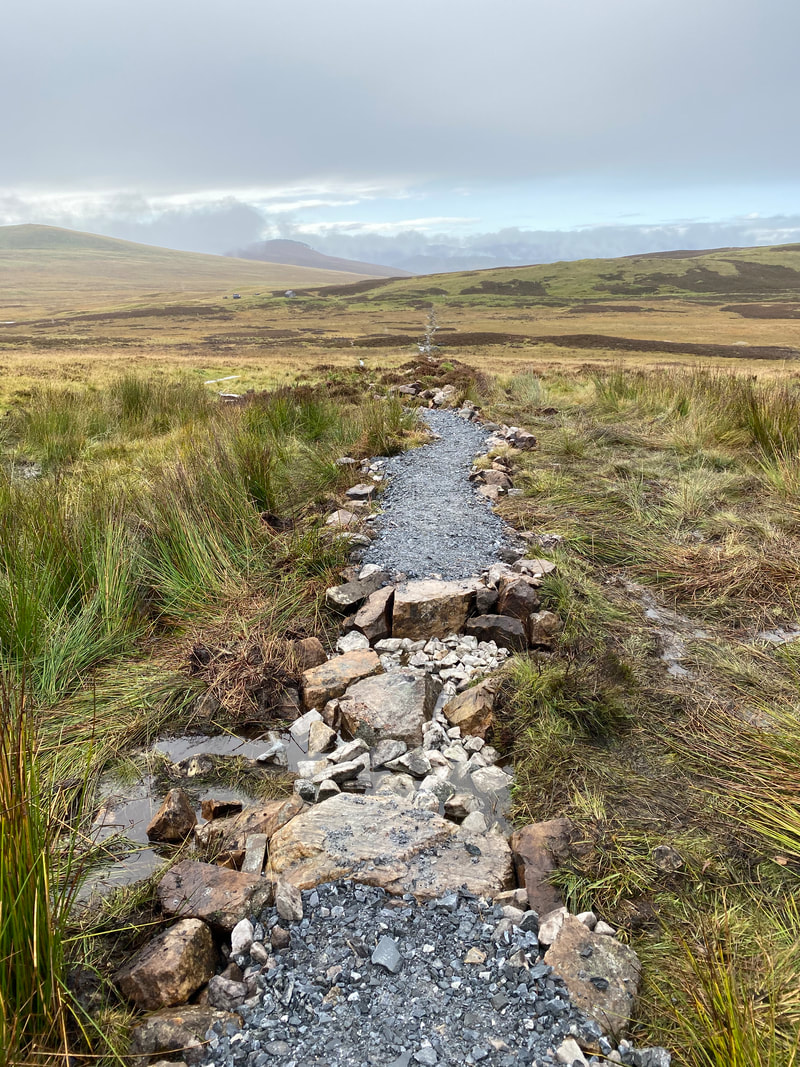
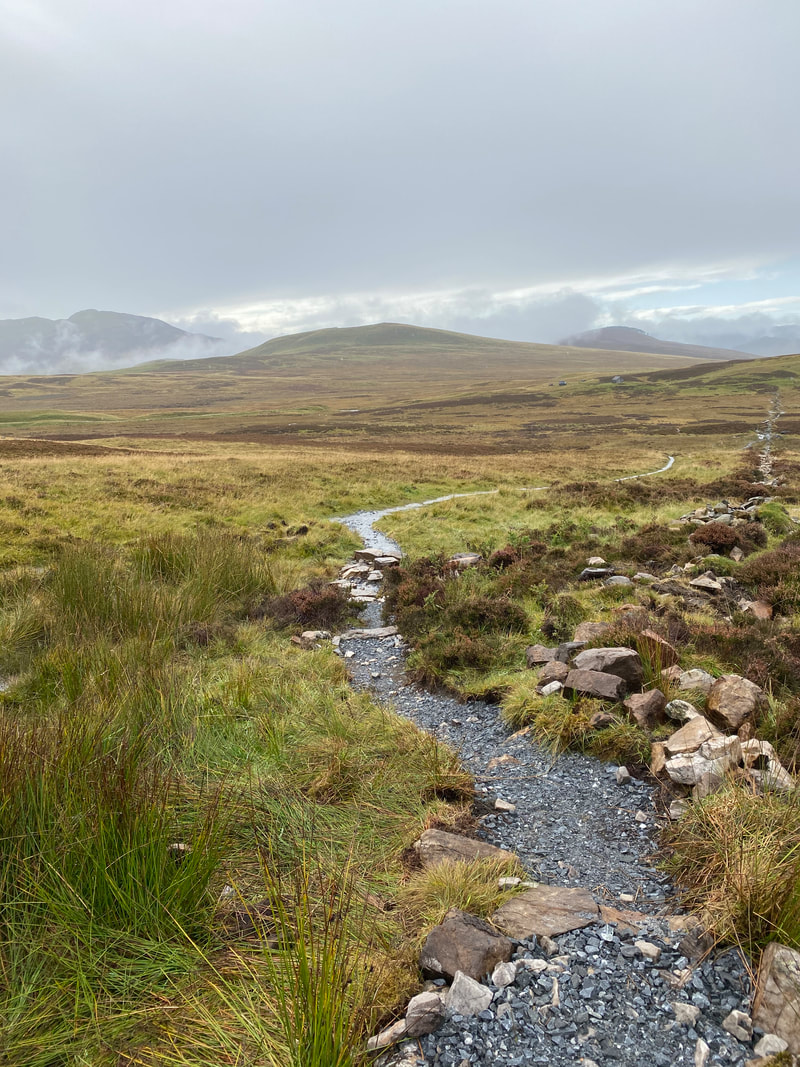
The lower section across the frequently flooded area which is intercepted by natural drainage channels was a case of building small islands of stone path which replicated the old tumbled down dyke.
Recycling the old Dyke.
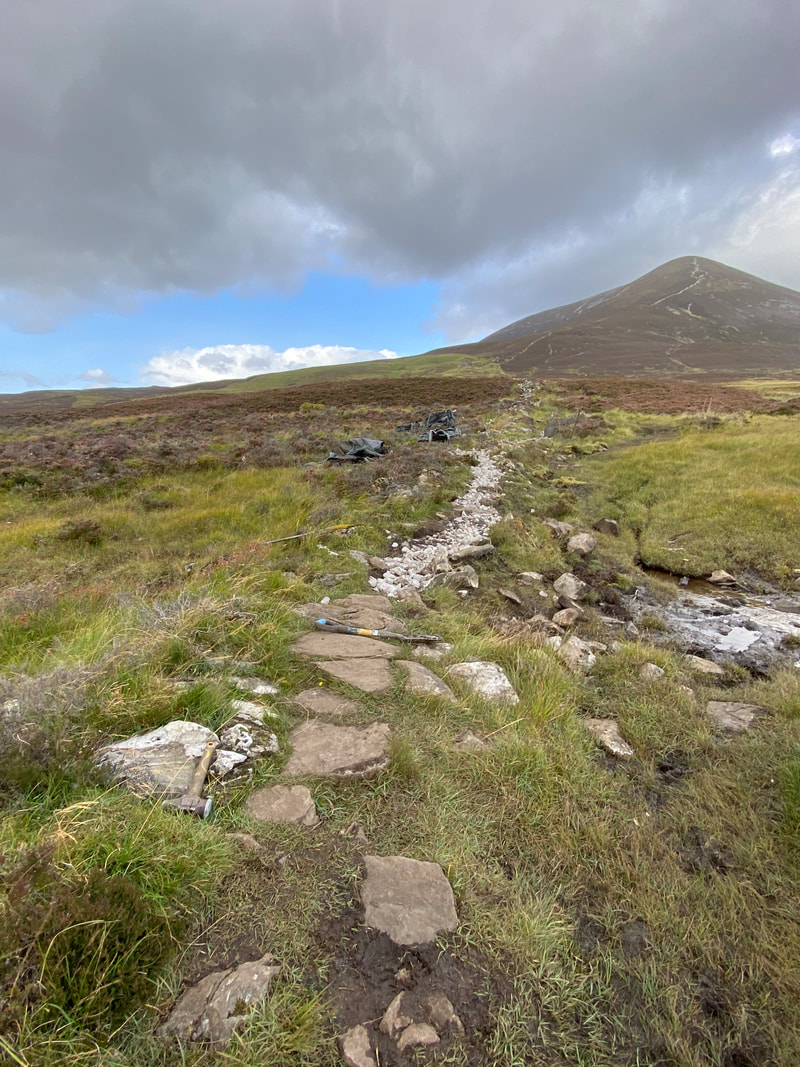
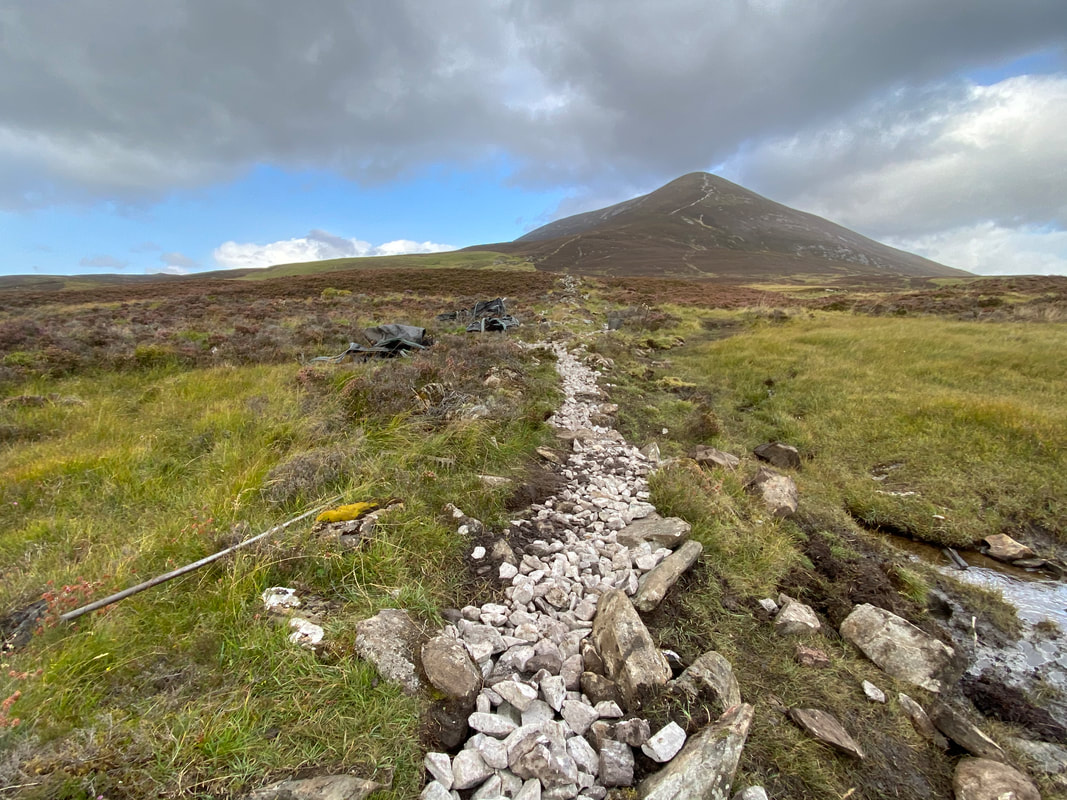
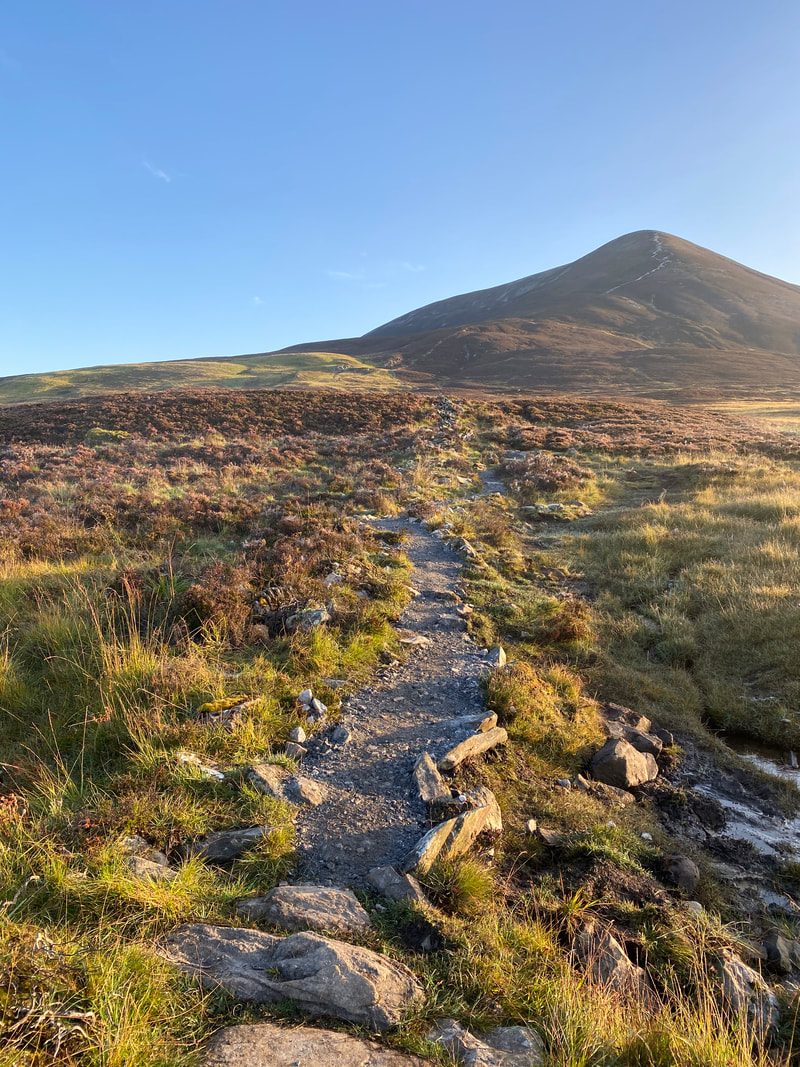
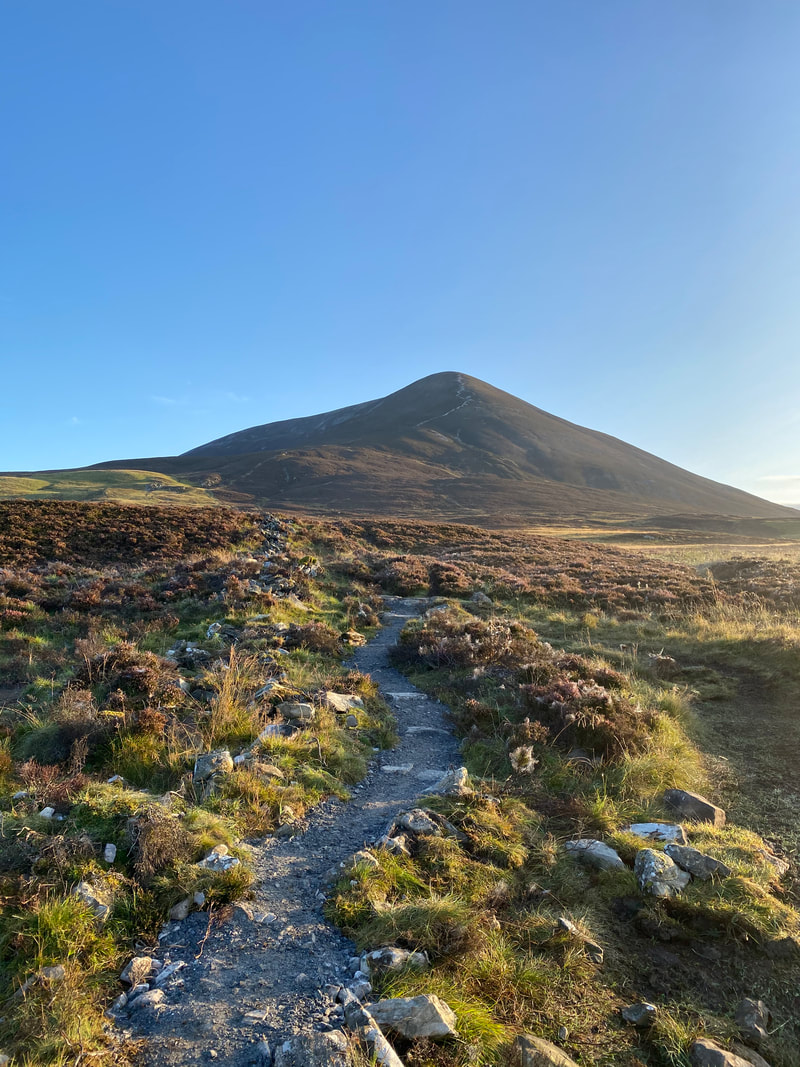
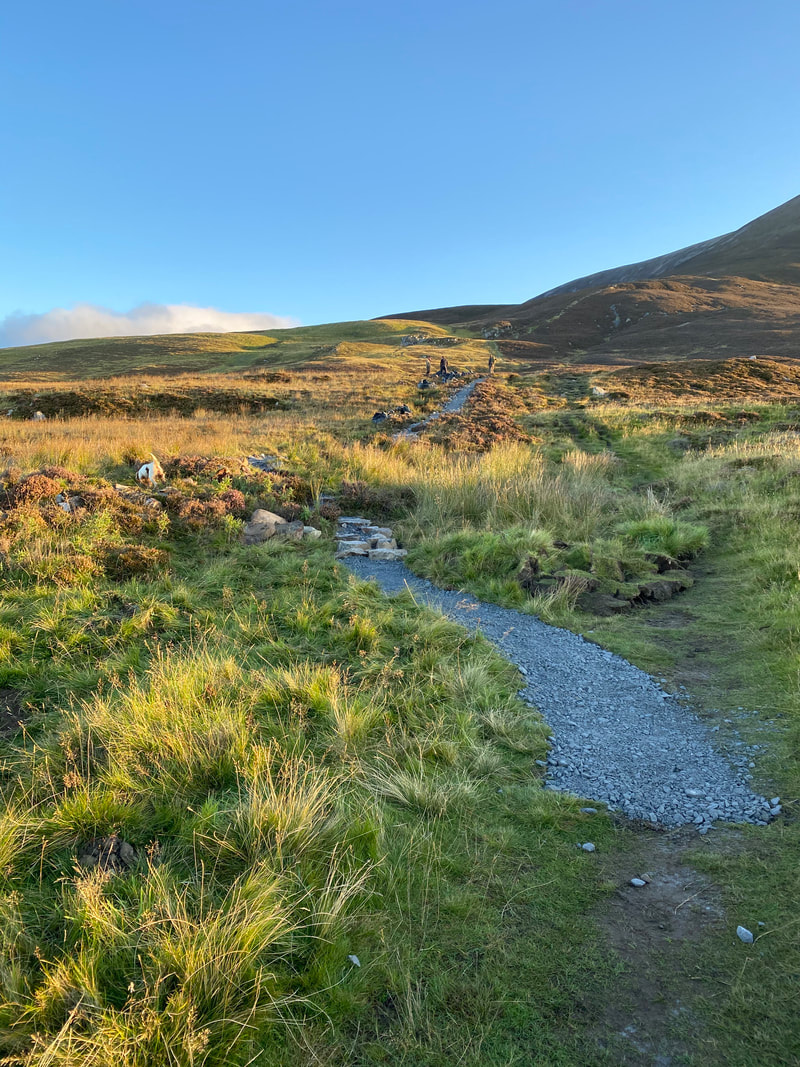
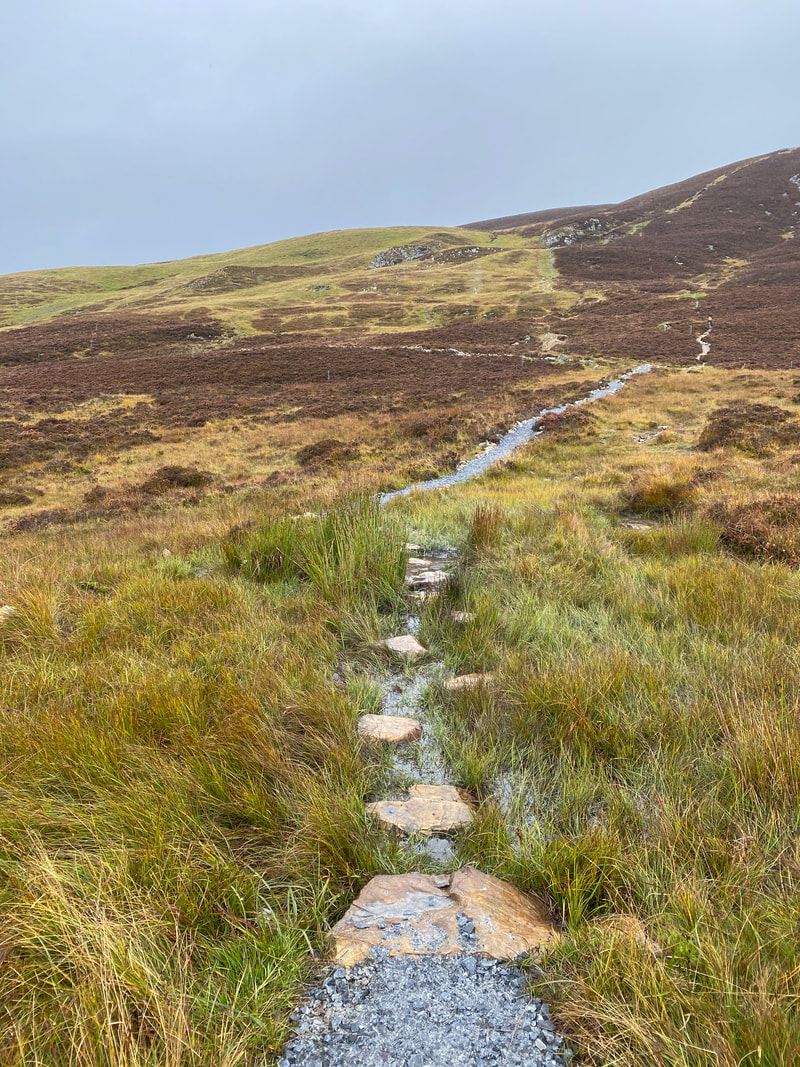
After the stone was removed for the upper path works we were left with the base of the wall, to this we created a raised edge, and formed a tray. into this was added the quartizite scree from the scarring up on the summit cone, this formed a hard wearing, free draining sub-base. This was then capped with imported fines to create a durable walking surface. Drains were added where required but all these were neutral drainage so as not to disrupt the natural flow of waters. In some areas stepping stones were also used to create a route through very boggy area.
The top section just involved the construction of extra water bars to slow the flow of water down and channel it to the sides at regular intervals.
The Fen Path was broken into 2 main sections of work, the upper section which followed the line of the old dyke involved turning that old dismantled dyke into a new path in areas where the existing trod had become badly damaged.
The lower section across the frequently flooded area which is intercepted by natural drainage channels was a case of building small islands of stone path which replicated the old tumbled down dyke.
Recycling the old Dyke.
After the stone was removed for the upper path works we were left with the base of the wall, to this we created a raised edge, and formed a tray. into this was added the quartizite scree from the scarring up on the summit cone, this formed a hard wearing, free draining sub-base. This was then capped with imported fines to create a durable walking surface. Drains were added where required but all these were neutral drainage so as not to disrupt the natural flow of waters. In some areas stepping stones were also used to create a route through very boggy area.
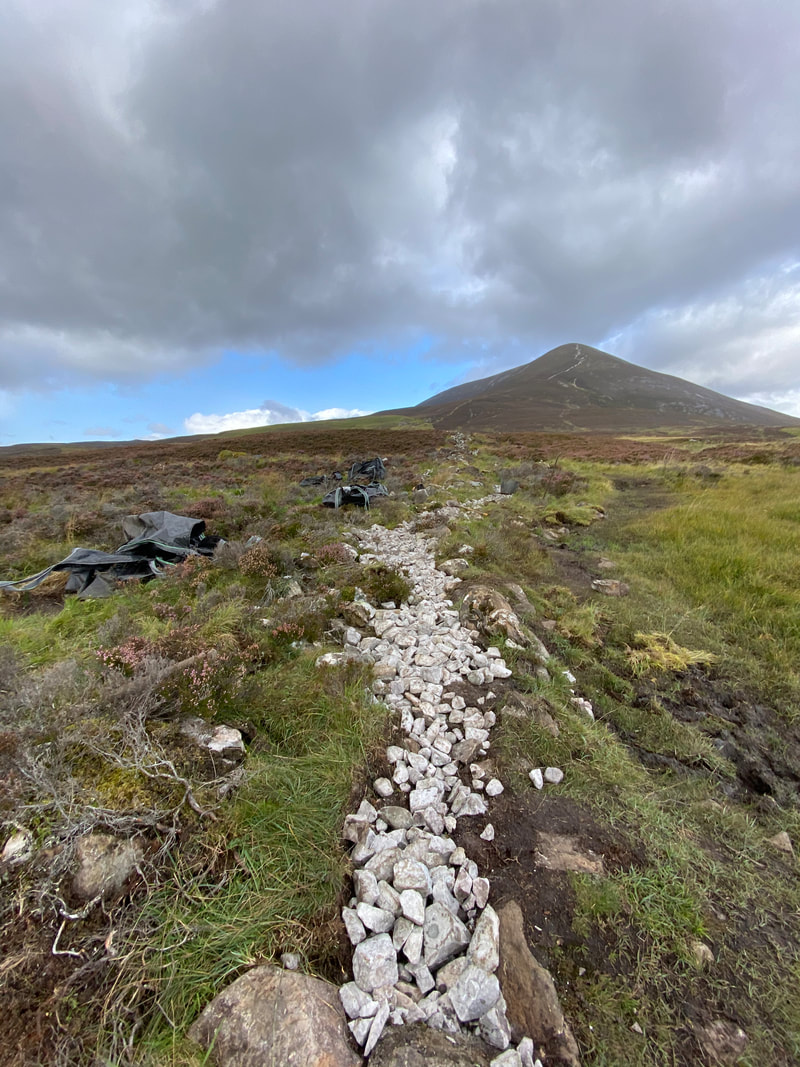
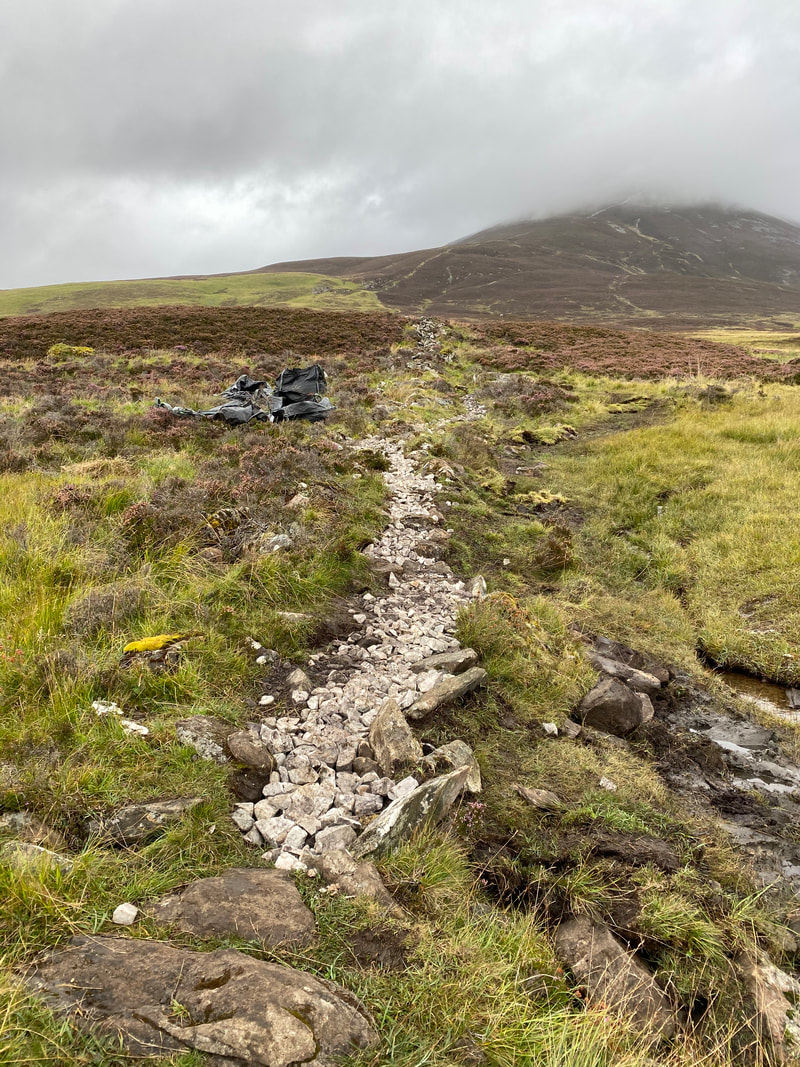
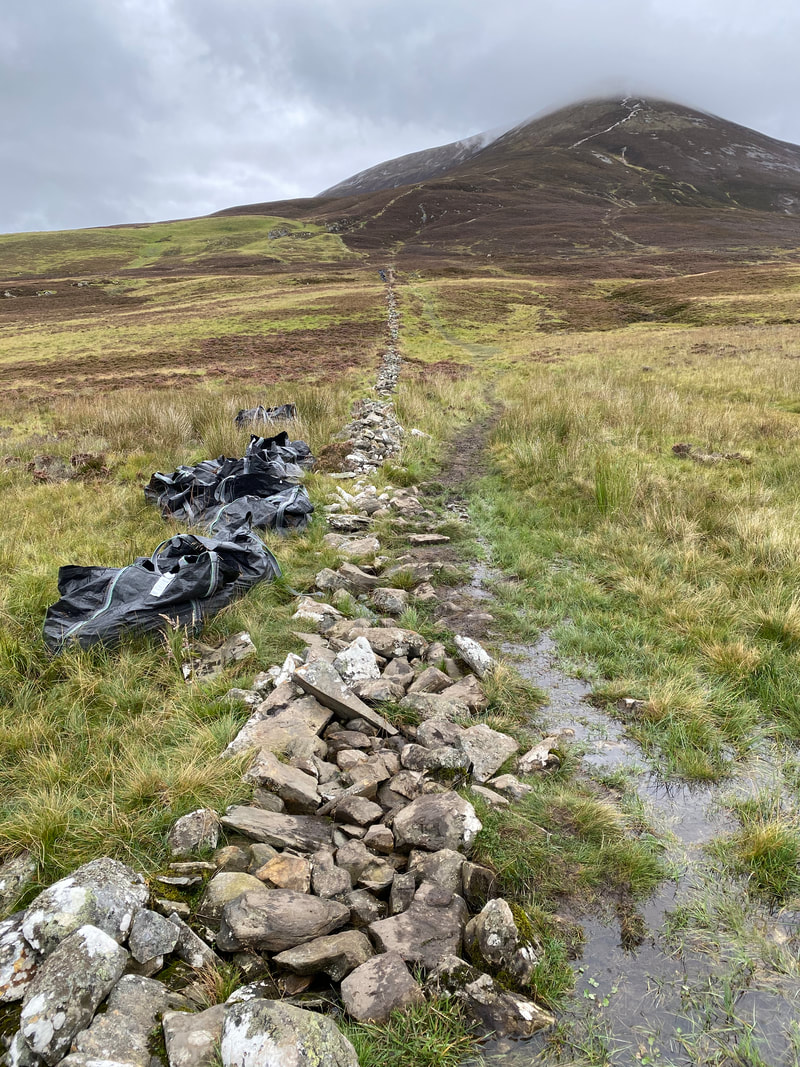

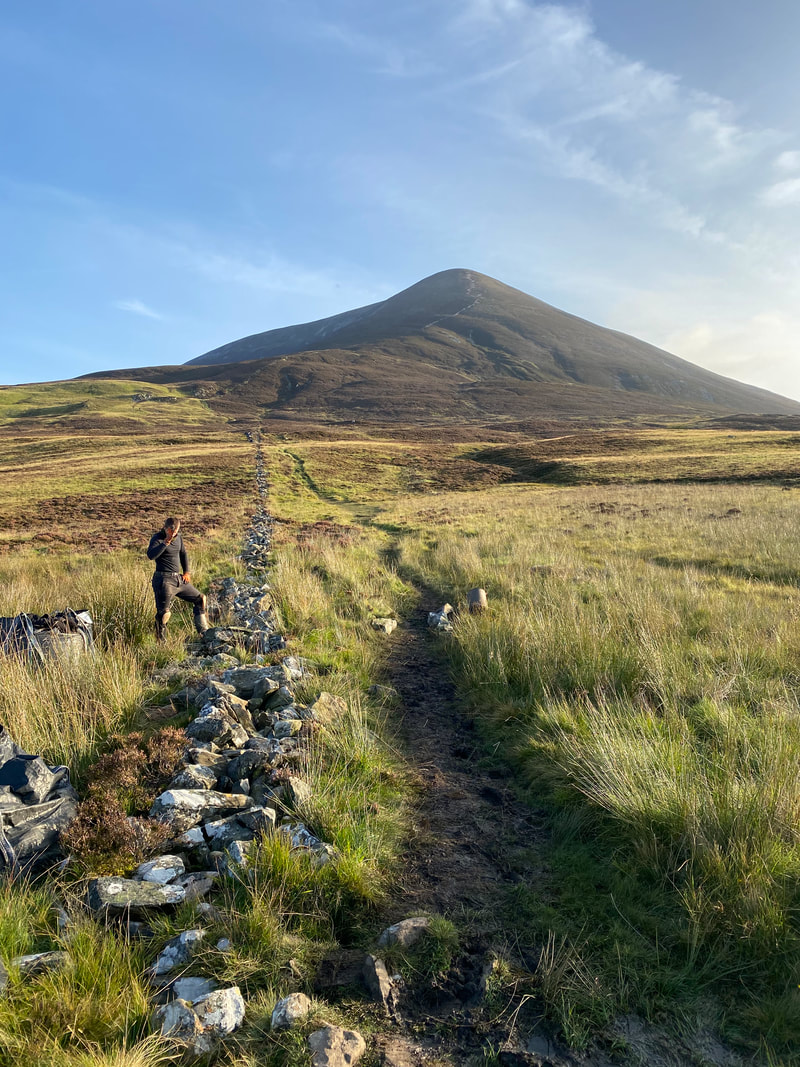



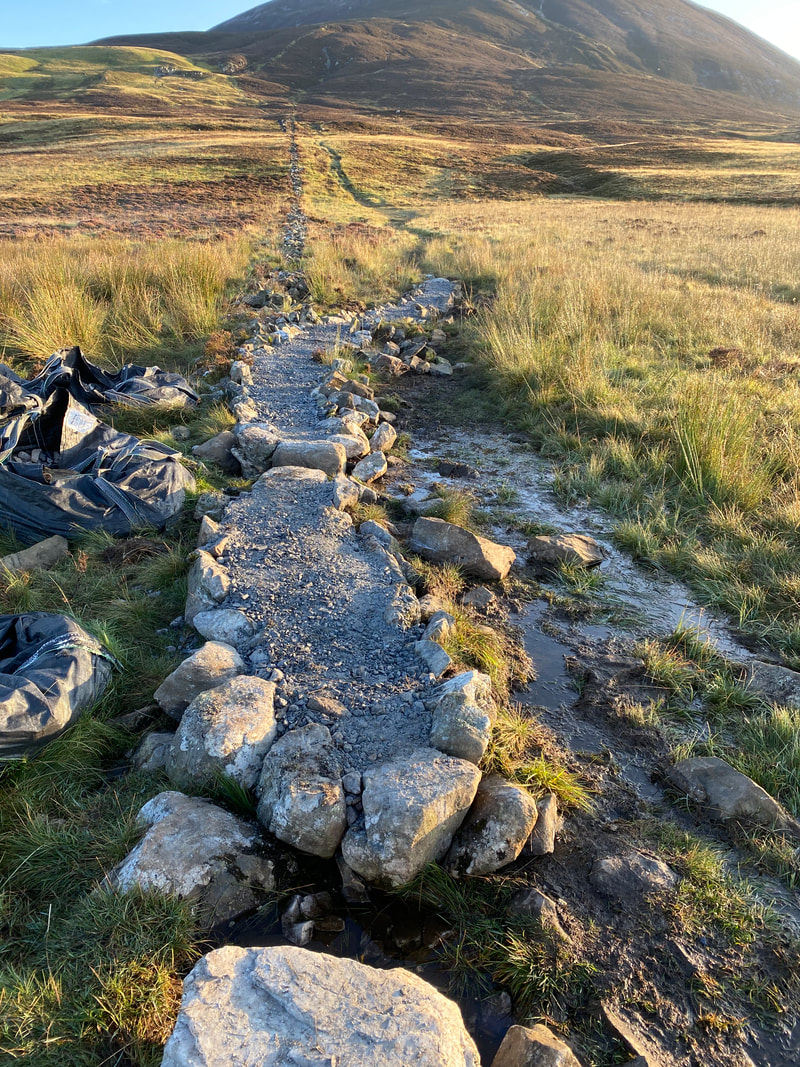
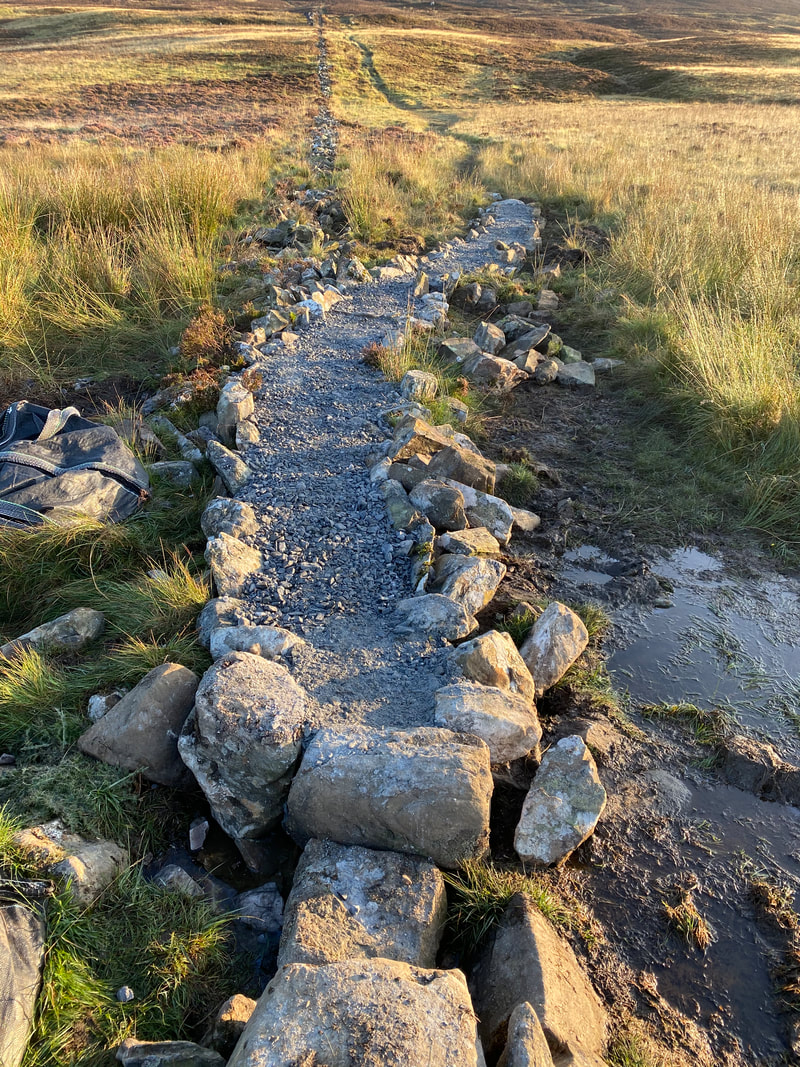
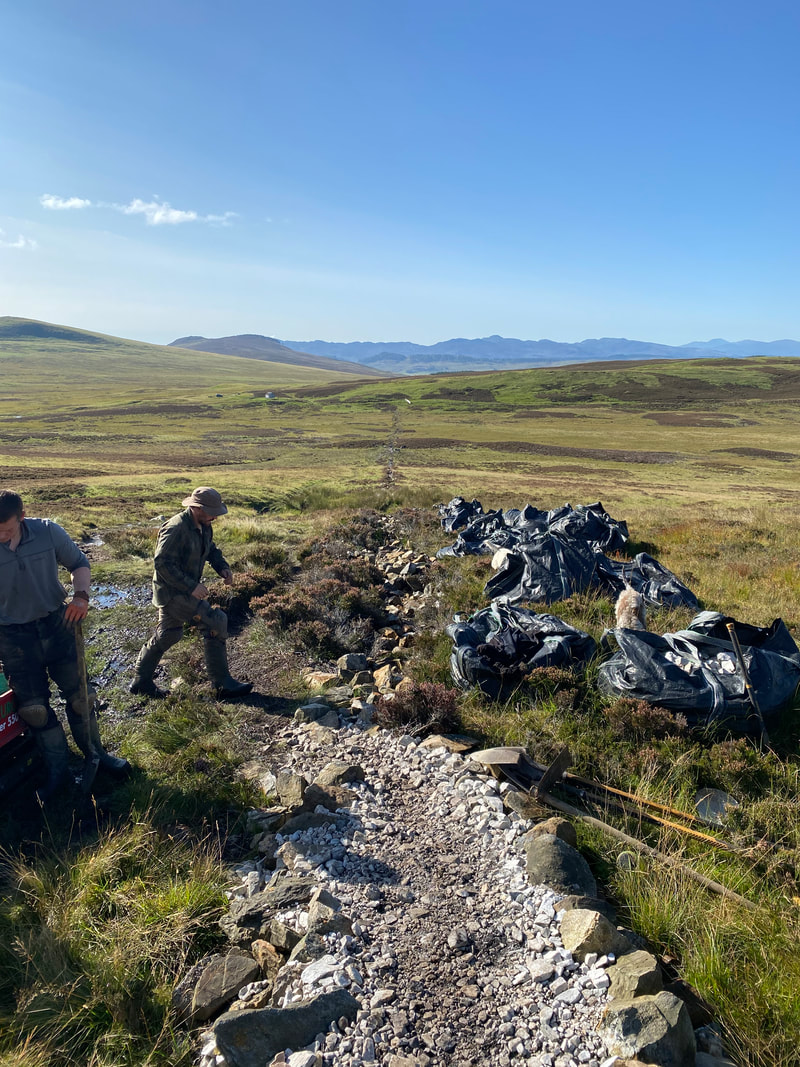
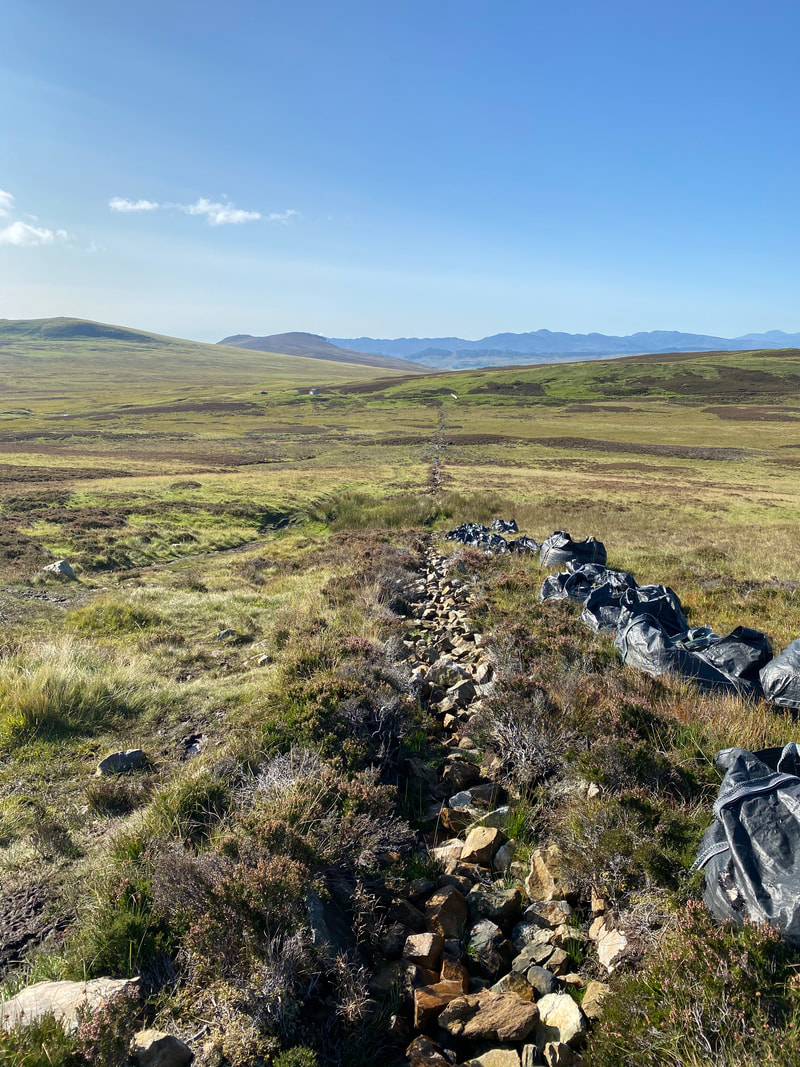
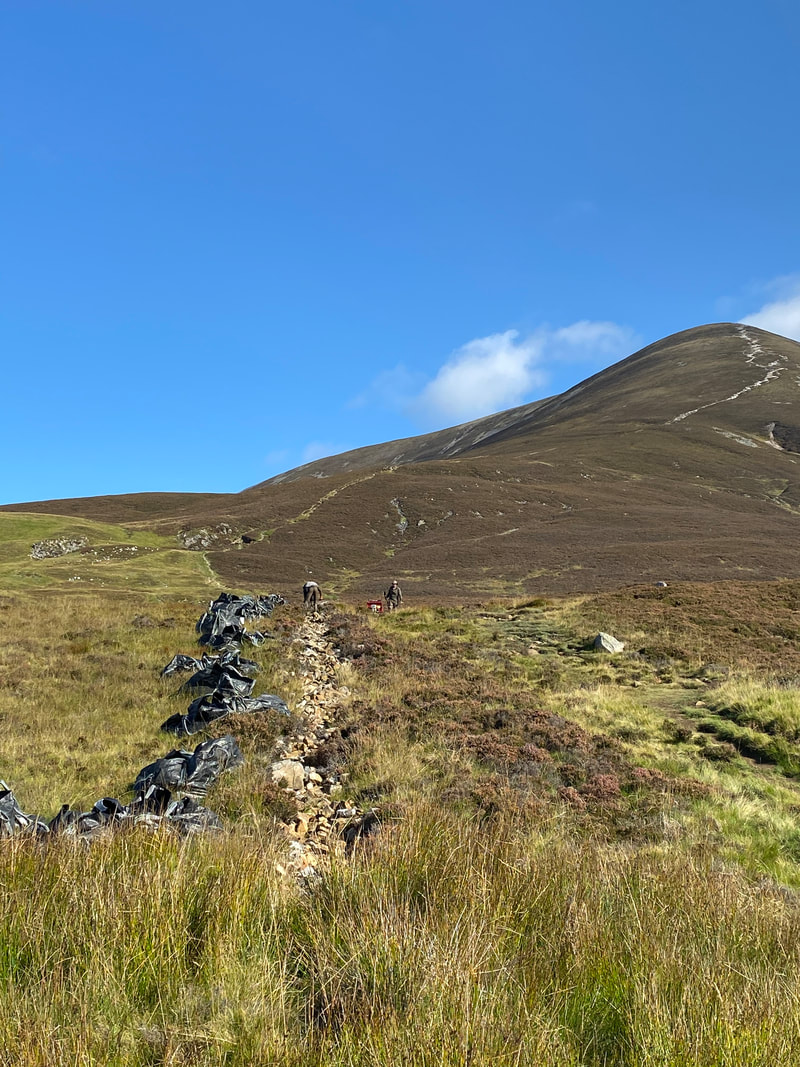
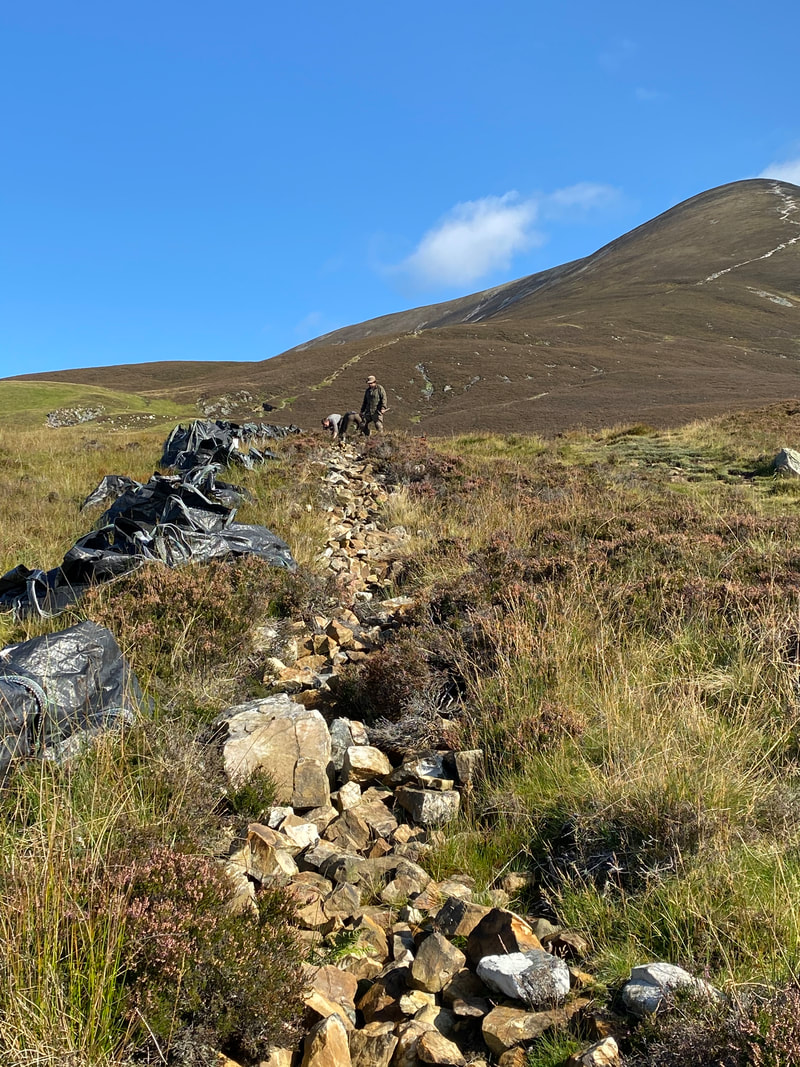
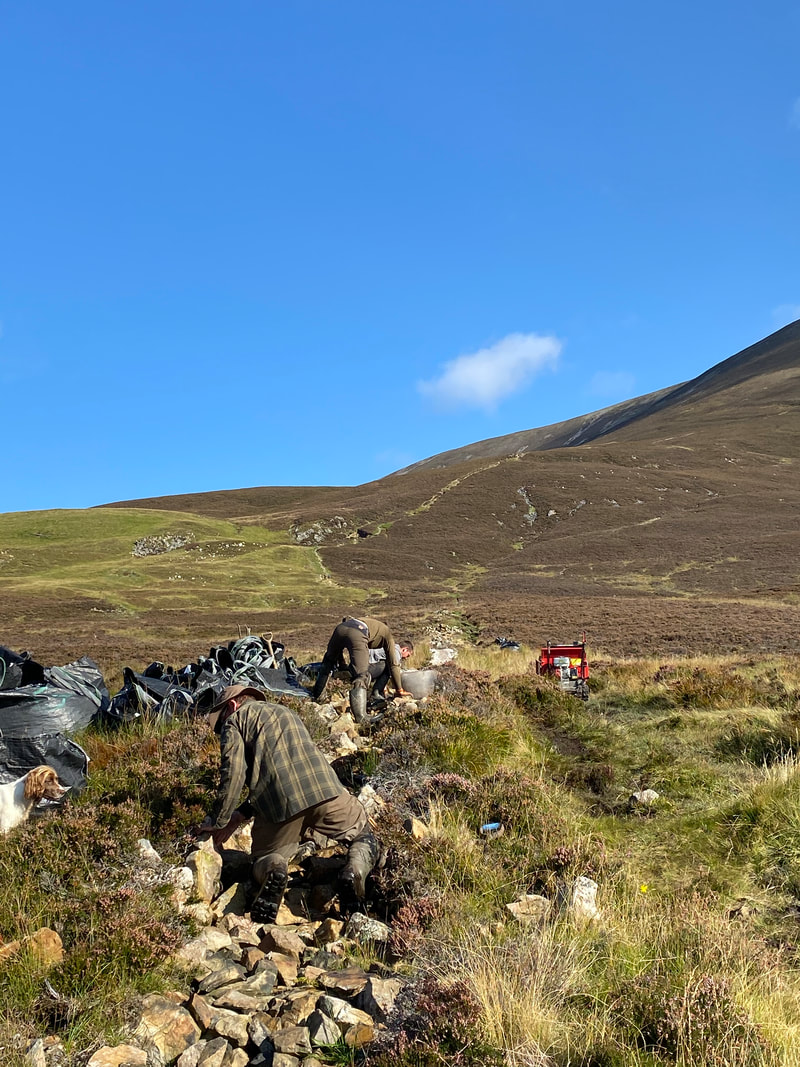


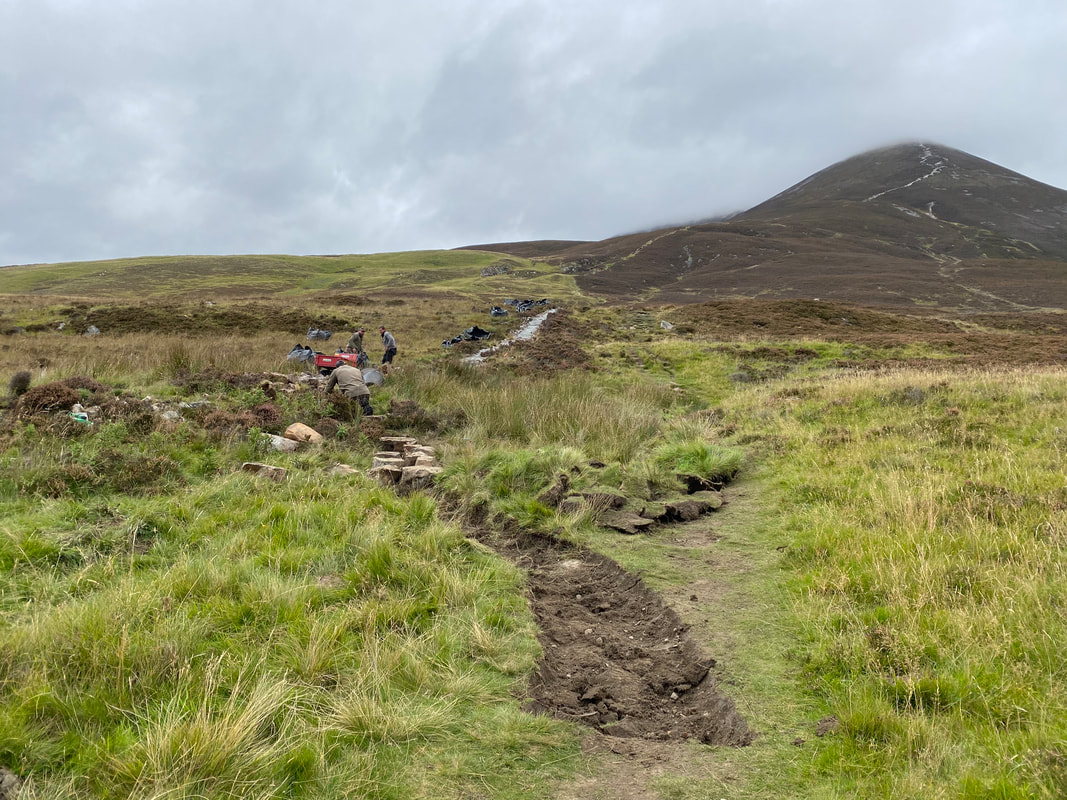

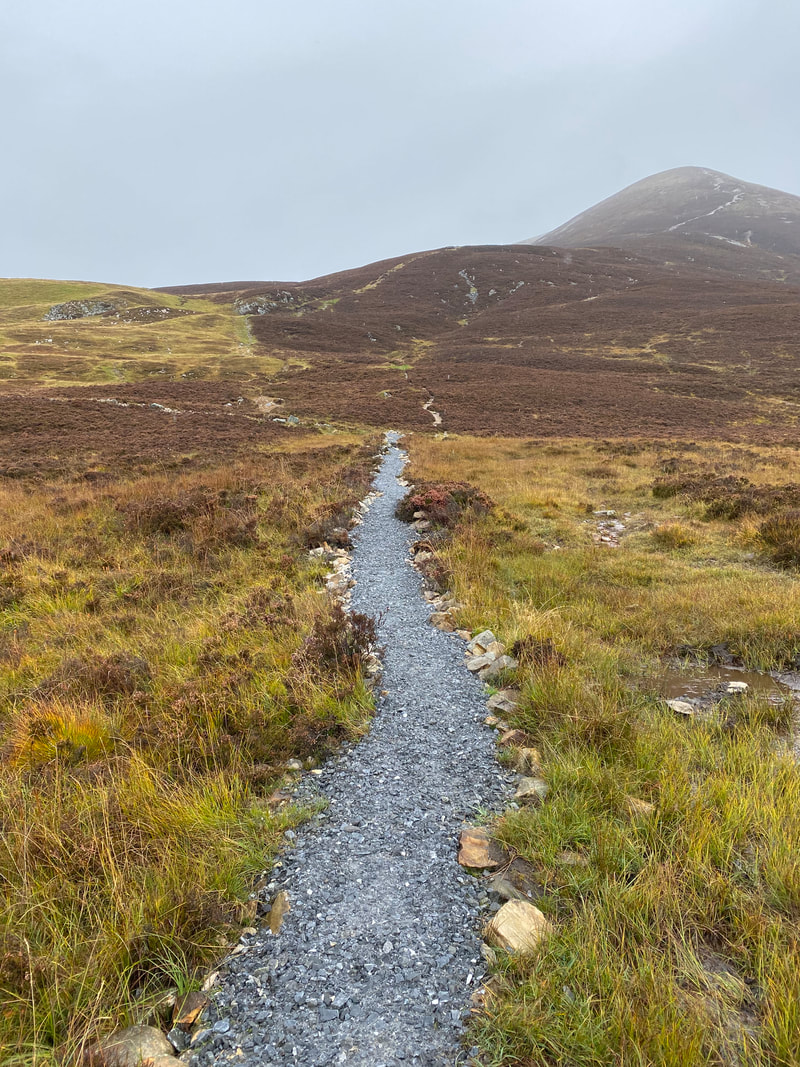
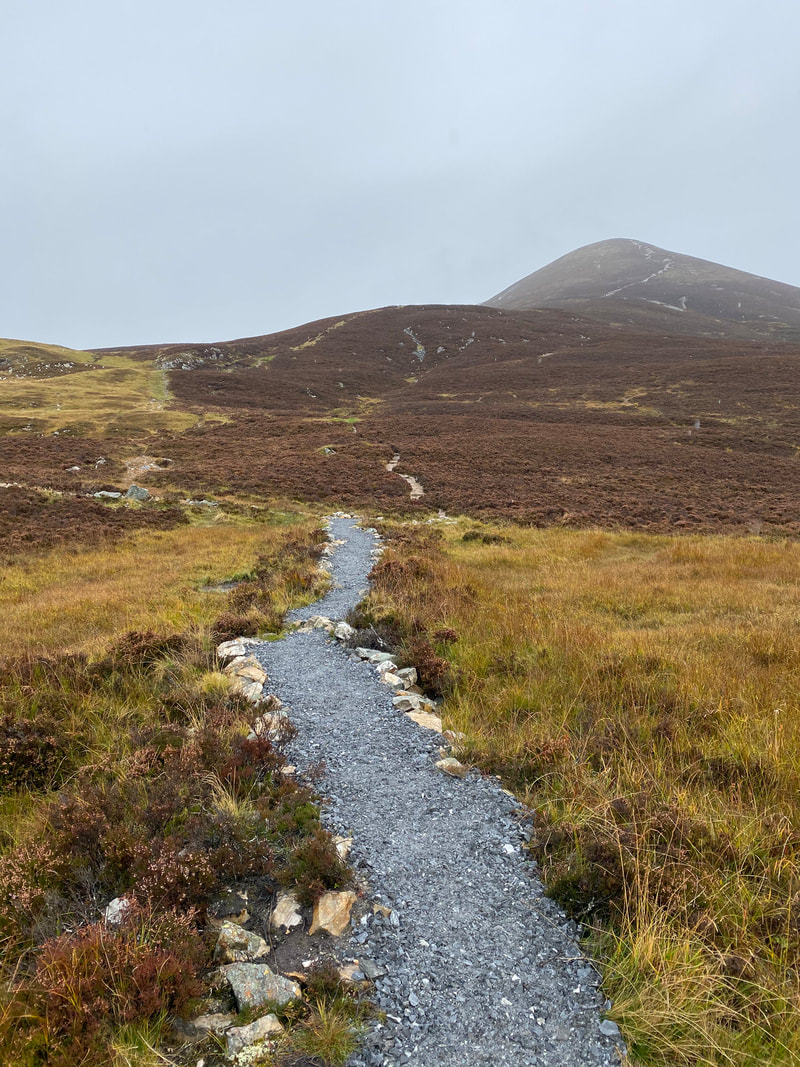
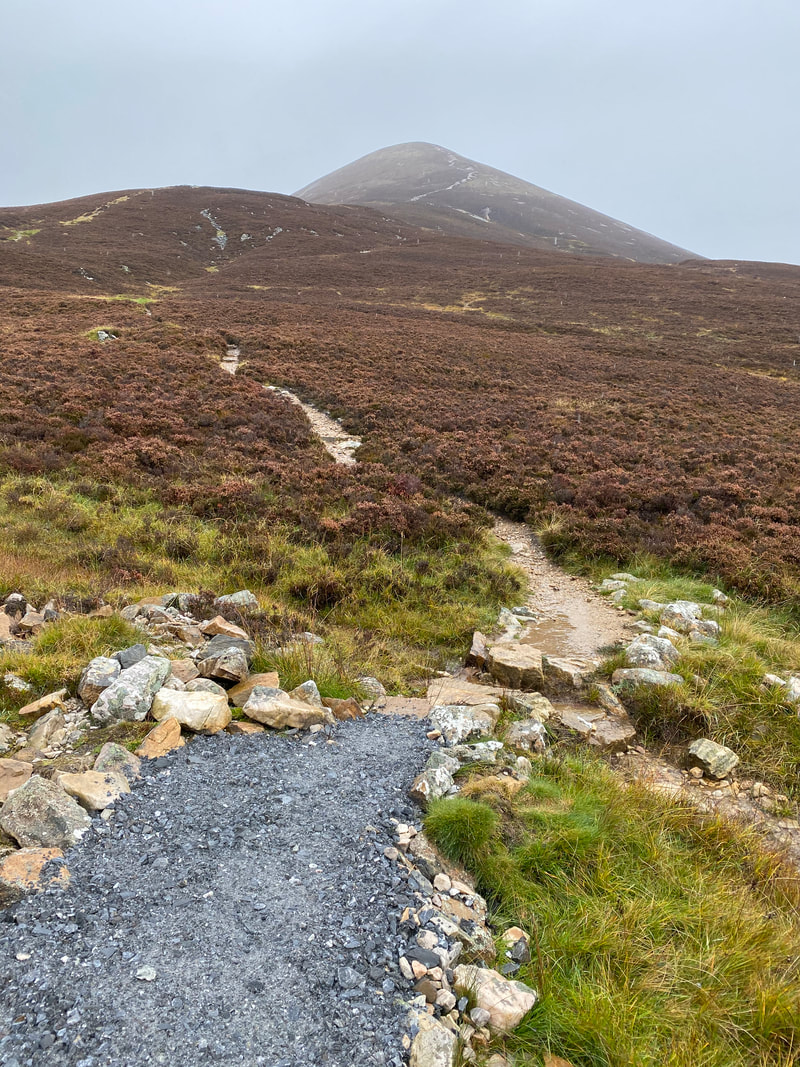



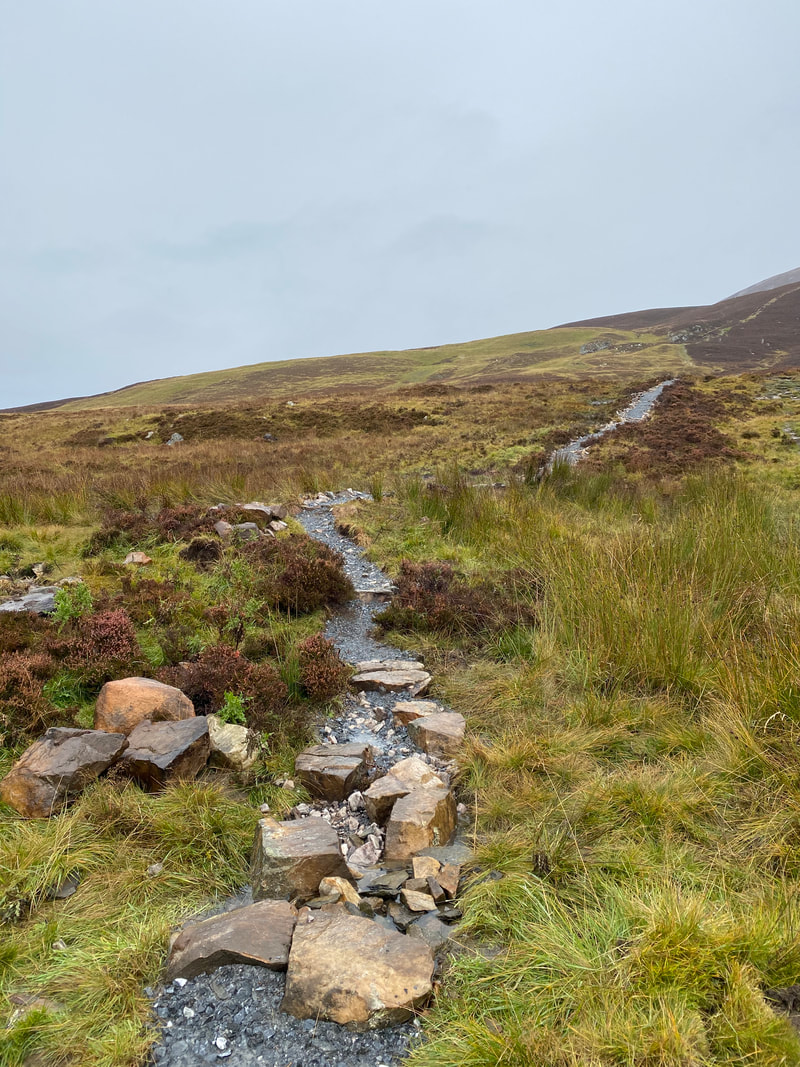
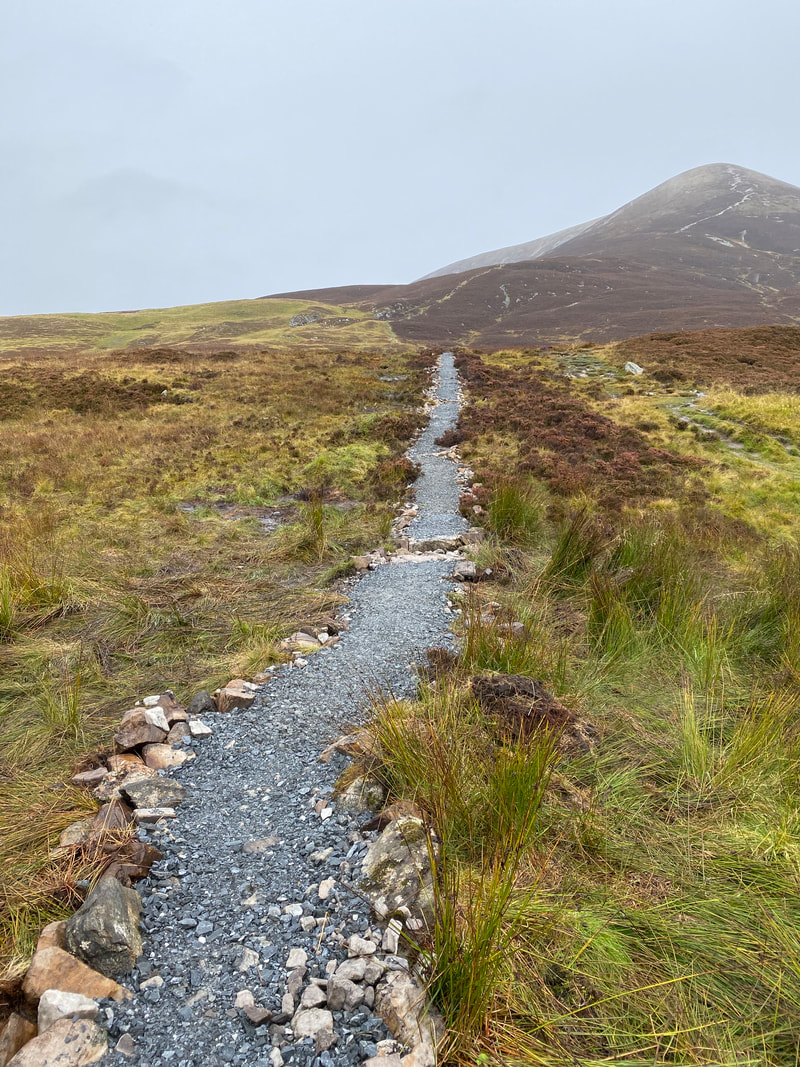

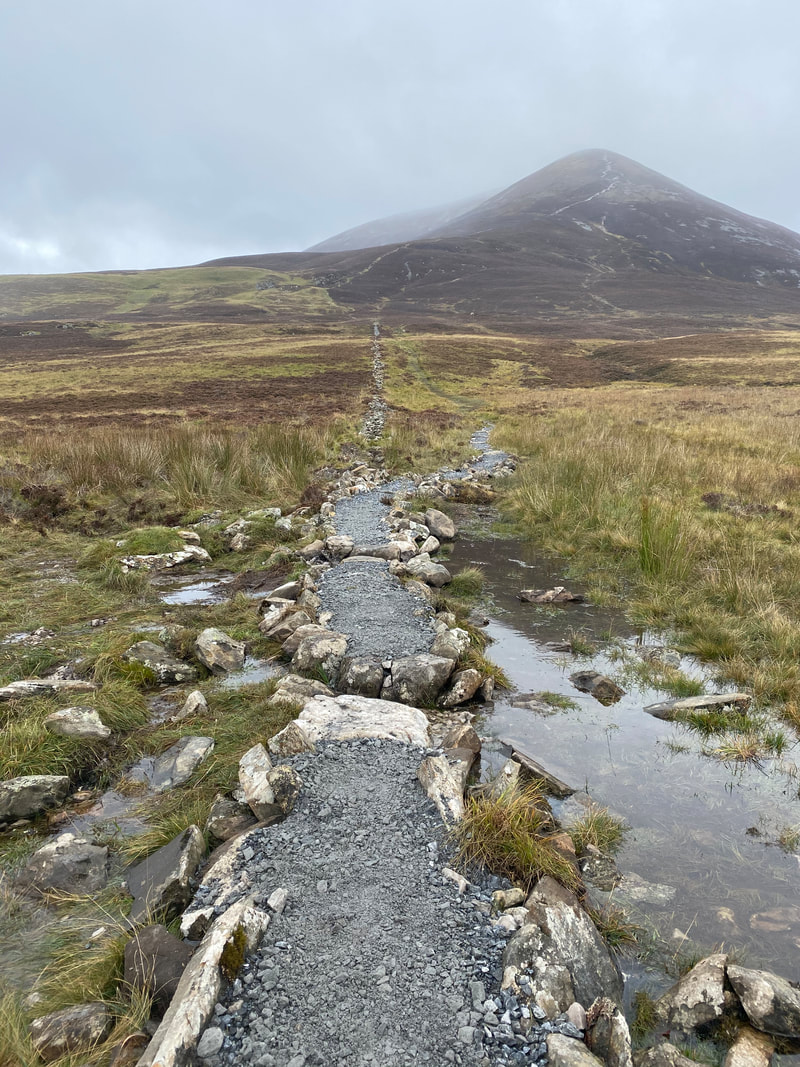
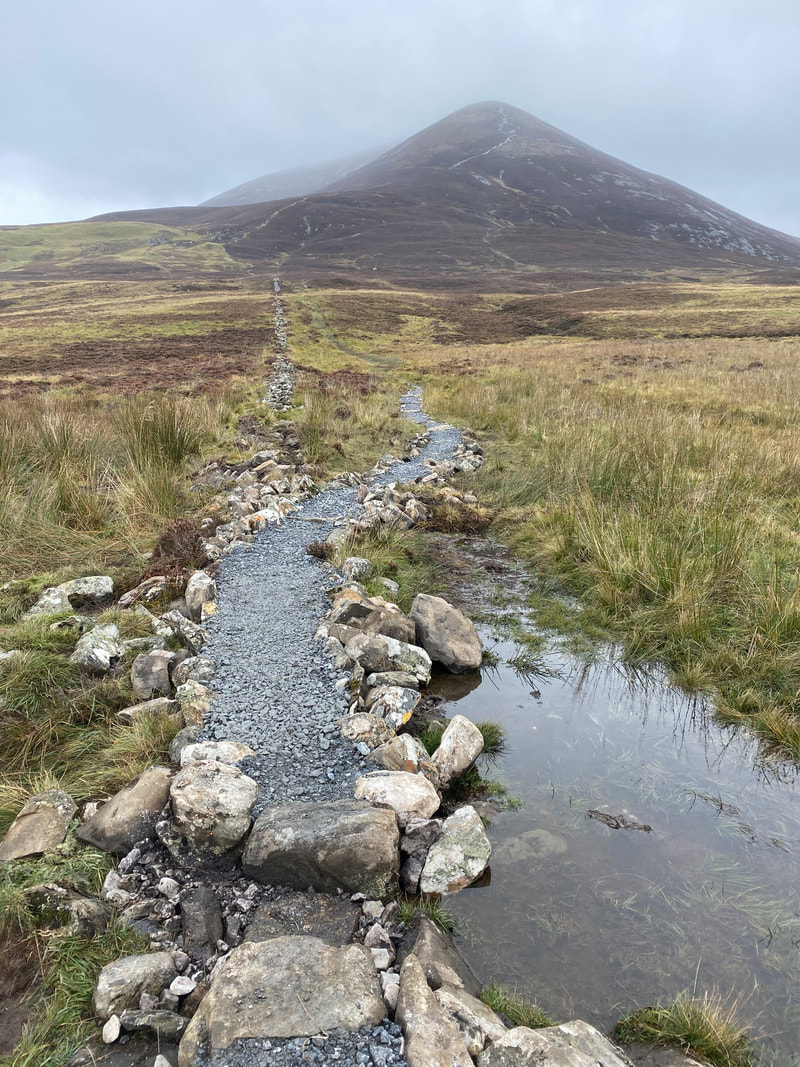
Replicating the old dyke.
Across the open wetland there had been many discussions over the previous years as to how we could achieve this, the various proposals had been; boardwalks, raised aggregate paths or some combination of them. Liability and maintenance plus aesthetics ruled out boardwalks and raised aggregate paths would have adversely effected the Fens natural flow of water.
We proposed replicating the look of the old dyke by using stone from there to create small islands and crossing points and areas of stepping stones to guide walkers to the areas we wished them to go.
This area is very prone to flooding, and in those times the entire area disappears under the water quickly so it was important to build a strong stone area that would be intact once the water receded.
Across the open wetland there had been many discussions over the previous years as to how we could achieve this, the various proposals had been; boardwalks, raised aggregate paths or some combination of them. Liability and maintenance plus aesthetics ruled out boardwalks and raised aggregate paths would have adversely effected the Fens natural flow of water.
We proposed replicating the look of the old dyke by using stone from there to create small islands and crossing points and areas of stepping stones to guide walkers to the areas we wished them to go.
This area is very prone to flooding, and in those times the entire area disappears under the water quickly so it was important to build a strong stone area that would be intact once the water receded.